Posted on

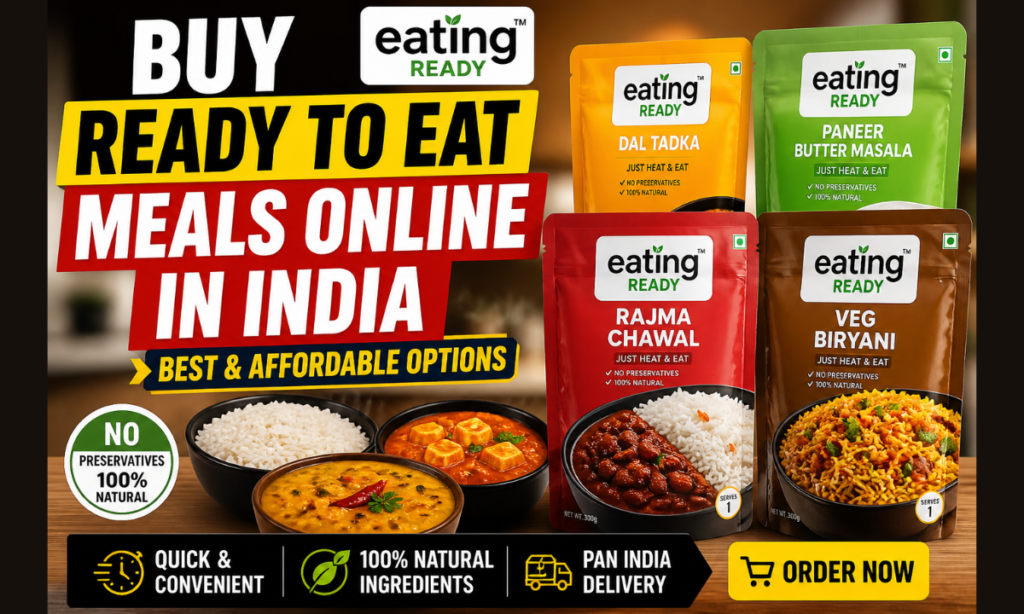
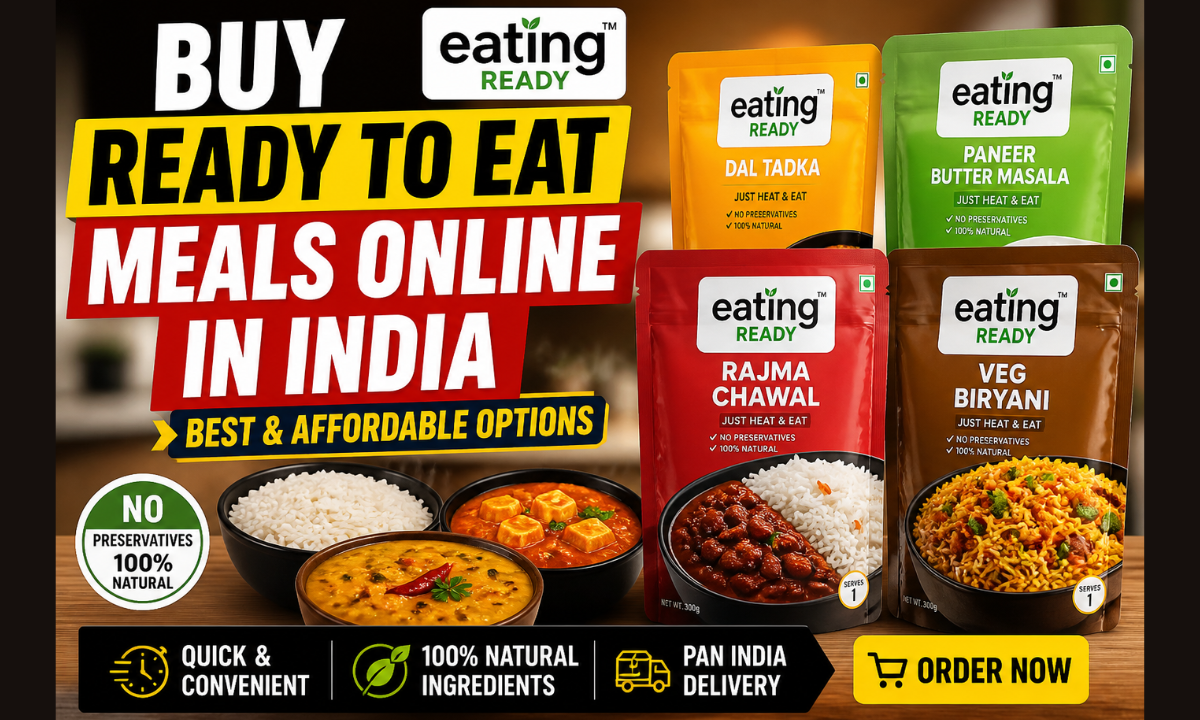
Buy Ready to Eat Meals Online in India (Best & Affordable Options)

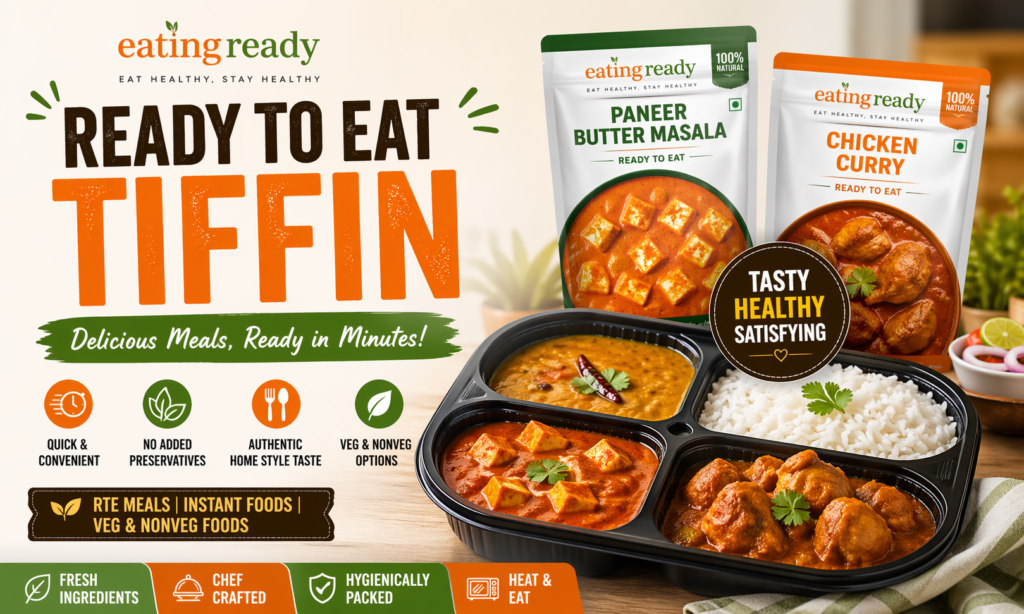
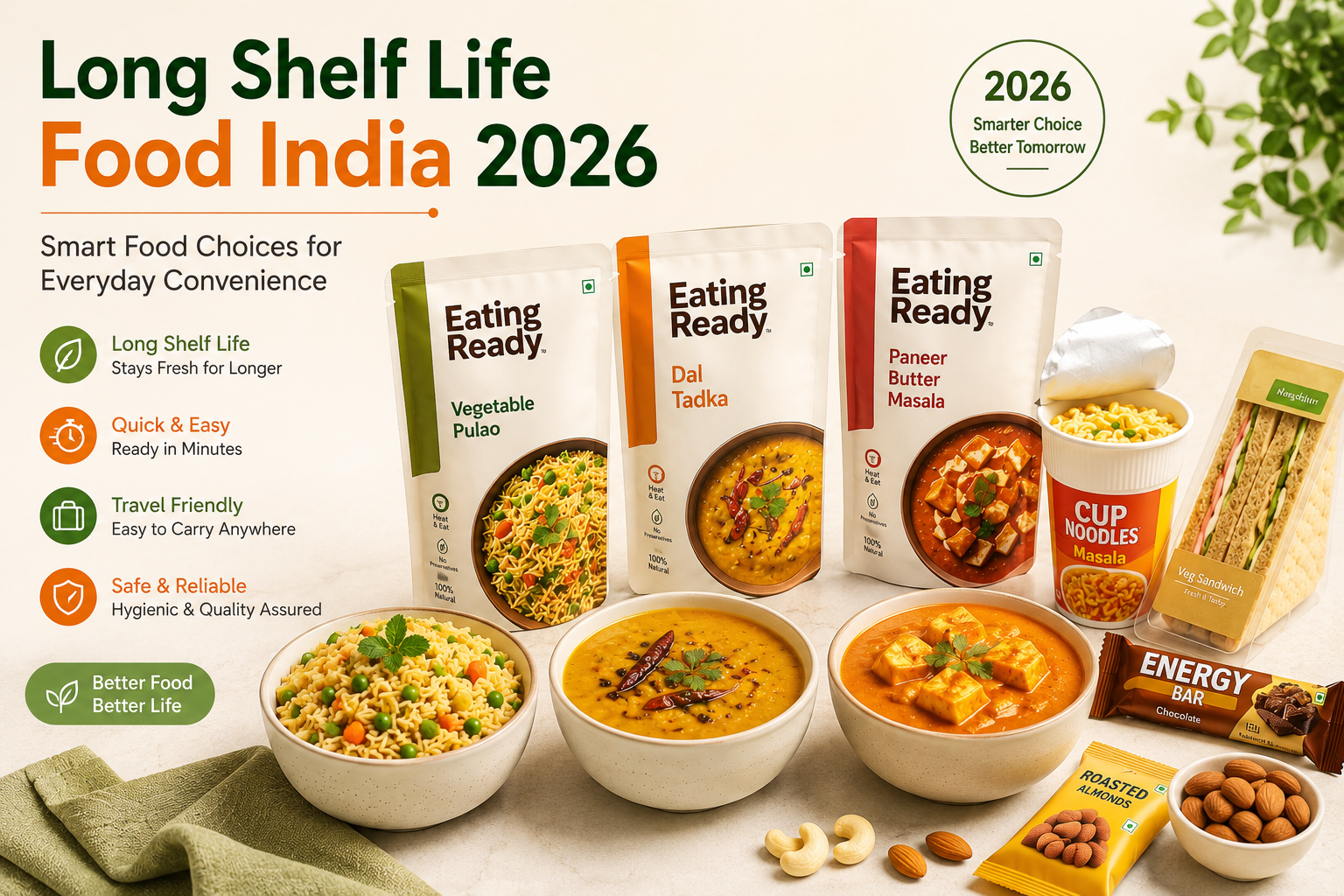
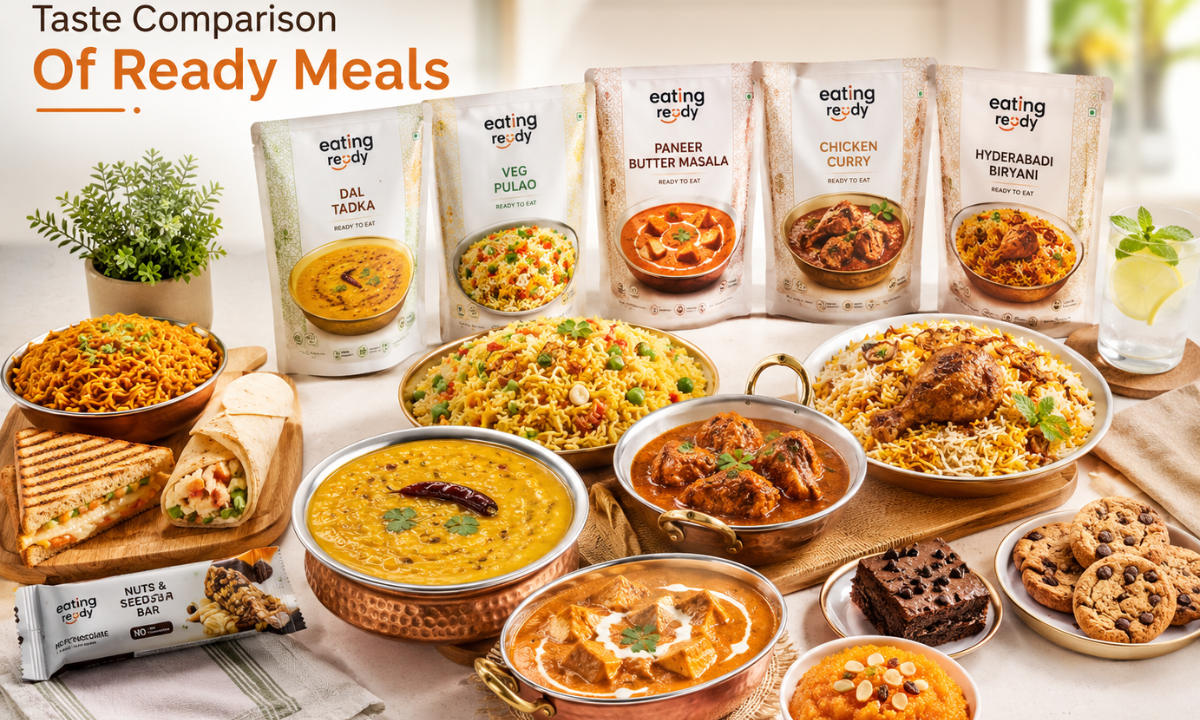
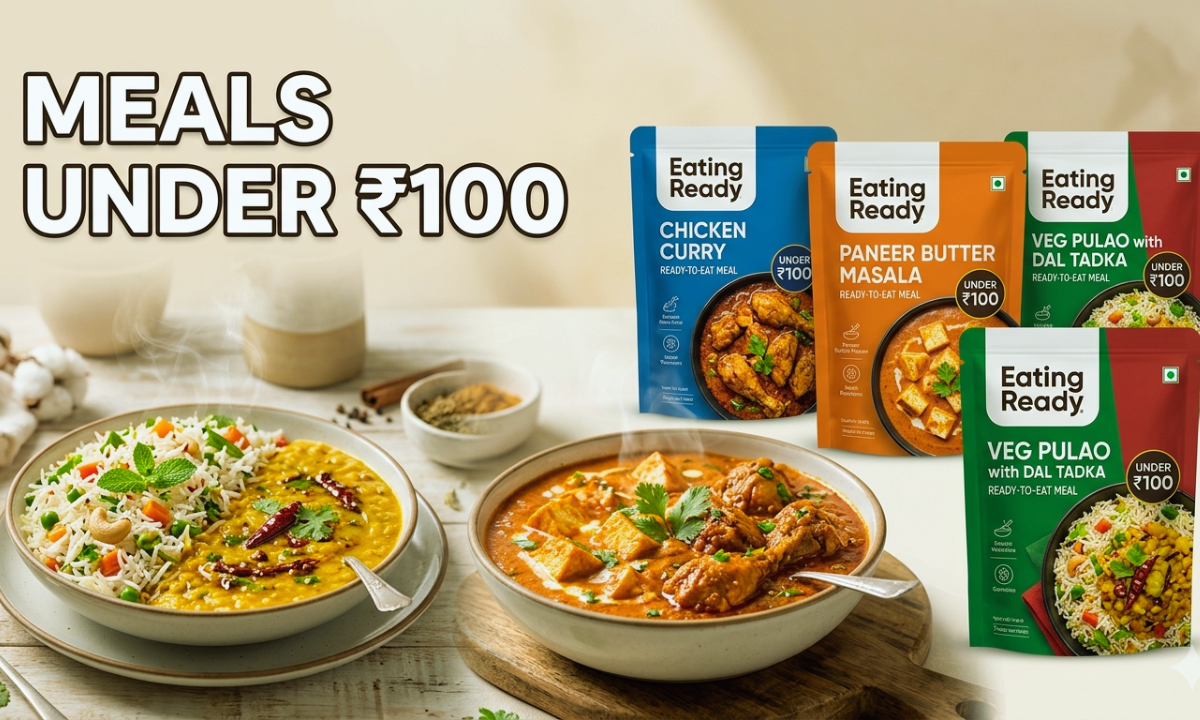
ready to eat meals online India variety food

Buy Ready to Eat Meals Online in India (Best & Affordable Options): In today’s busy lifestyle, cooking every day is not always possible. Many people in India are now looking for faster and easier food options that save time without compromising too much on taste. This is where ready to eat meals are becoming very useful.

Whether you are a student, a working professional, or someone who travels often, these meals can make your daily routine much easier. The demand for ready to eat food online in India has increased because people want convenience along with affordability.

If you are planning to buy ready to eat meals online, this detailed guide will help you understand everything clearly, including types, benefits, pricing, health factors, and how to choose the best option.

What Are Ready to Eat Meals?

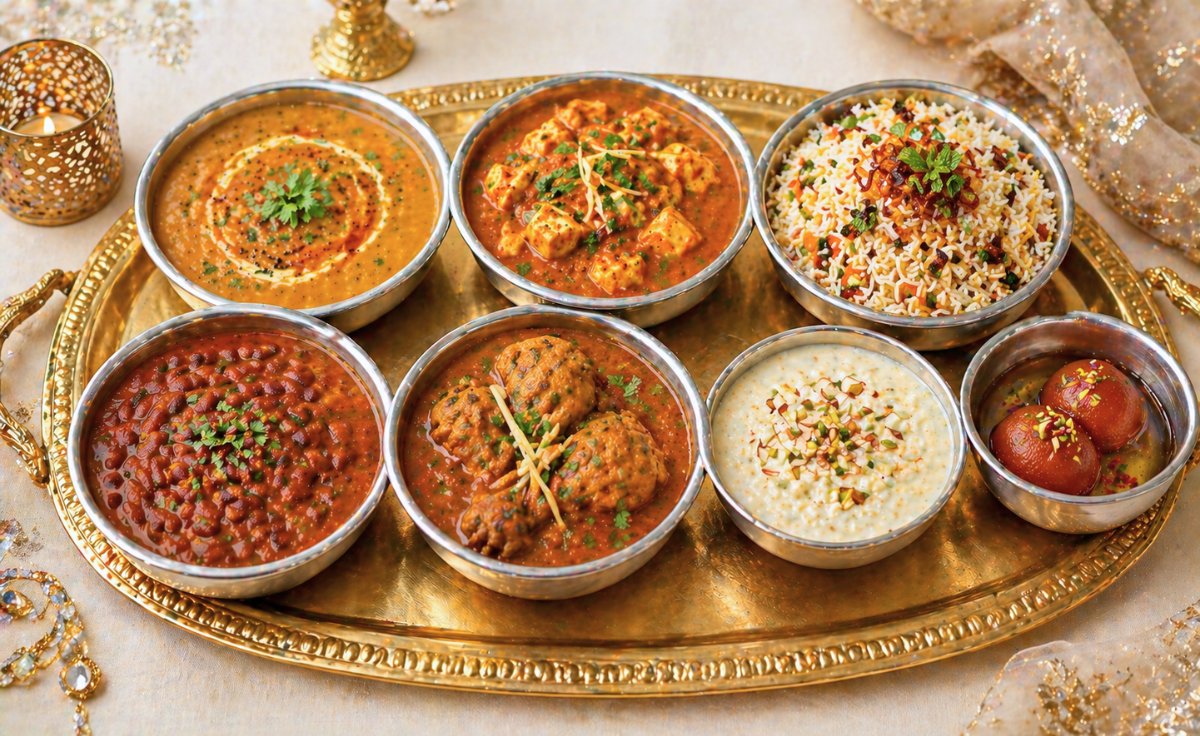
Different Indian Meals

Ready to eat meals, also known as RTE foods, are fully cooked food products that can be consumed instantly or after simple heating. These meals are packed using special techniques to maintain freshness and increase shelf life.

Most ready to eat meals India offers come in sealed pouches or containers. Some require heating in hot water or a microwave, while others can be eaten directly.

These meals are designed mainly for convenience, making them ideal for people who do not have access to a kitchen or do not want to cook daily.

Why People Prefer Ready to Eat Meals in India

The popularity of ready meals India is growing rapidly, and there are several strong reasons behind it.

Time Saving

Cooking involves preparation, cooking, and cleaning. Ready meals remove all these steps and save time.

Easy to Use

Anyone can use them. No cooking skills are required.

Suitable for Busy Lifestyle

Working professionals and students find it very helpful.

Portable and Travel Friendly

These meals are easy to carry during travel, making them ideal for long journeys.

Affordable Options Available

There are many cheap ready to eat meals available, which makes them accessible to a wider audience.

Types of Ready to Eat Meals Available Online

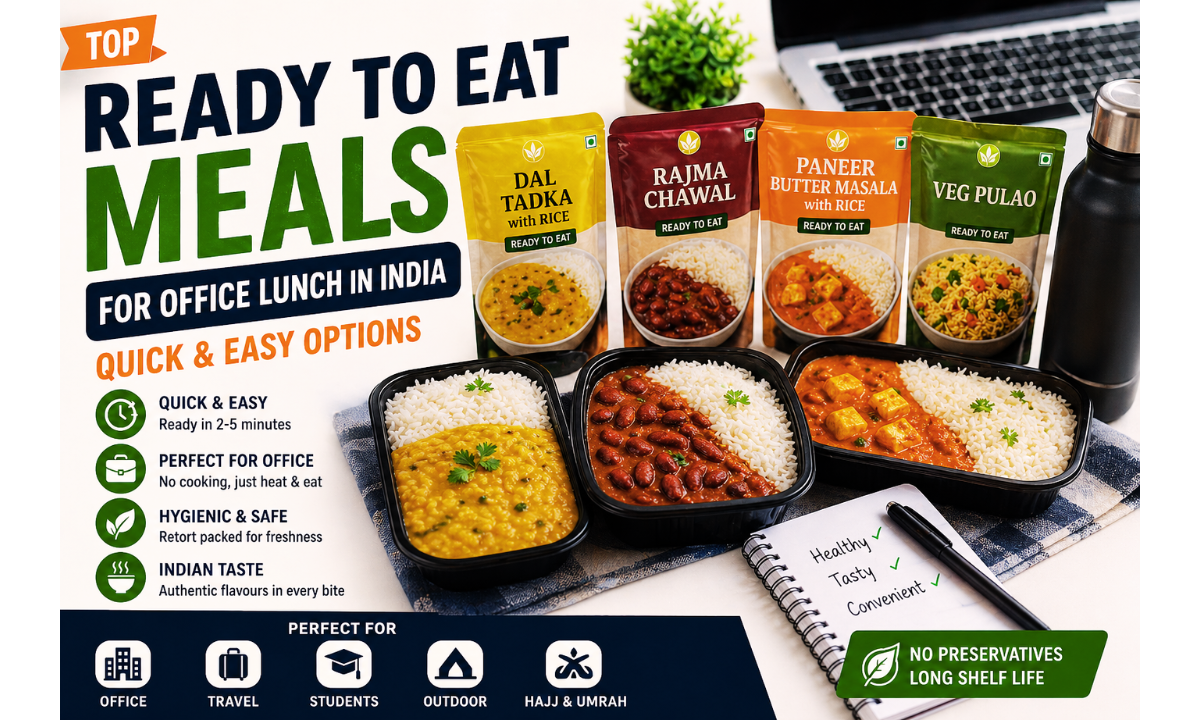
ready to eat meals for office lunch in India including veg and non veg quick food options
Quick and easy ready to eat meals perfect for office lunch in India with veg and non-veg options.

When you search for ready to eat meals for sale, you will find a wide variety of options. Understanding these categories helps you choose better.

1. Indian Vegetarian Meals

These are the most popular in India because they match daily eating habits.

Examples:

  • Dal Makhani
  • Rajma Chawal
  • Chole Masala
  • Paneer Butter Masala

These are widely available when you buy ready to eat food online.

2. Non Vegetarian Meals

For people who prefer non-veg food, there are many choices.

Examples:

  • Butter Chicken
  • Chicken Curry
  • Fish Curry

These meals are rich in protein and suitable for a complete meal.

3. Instant Rice and Noodle Meals

These are quick filling options.

Examples:

  • Veg Pulao
  • Fried Rice
  • Instant Noodles

They are widely included in ready to eat meals for sale because of their demand.

4. Healthy Ready to Eat Meals

Health-conscious people prefer better quality options.

These include:

  • Low calorie meals
  • High protein food
  • Balanced nutrition meals

Choosing healthy ready to eat meals is important if you plan to consume them regularly.

5. Ready to Cook Meals

These are slightly different from ready to eat meals.

They require basic cooking before eating. Many people who want fresh taste prefer to buy ready to cook meals instead.

Where to Buy Ready to Eat Meals Online in India

Today, there are many platforms where you can buy ready to eat meals online.

Online Grocery Platforms

These include apps and websites where you can order daily food items.

E-commerce Websites

Large platforms offer a wide variety of ready to eat food India options.

Brand Websites

Some brands sell directly through their own websites, often at better prices like Our “Eating Ready Foods“.

Before purchasing, always compare products, reviews, and prices.

How to Choose the Best Ready to Eat Meals

Not every product available online is good. You need to check a few important factors before buying.

Check Ingredients Carefully

Choose meals made with simple and clear ingredients. Avoid too many chemicals or preservatives.

Look at Nutritional Value

If you are buying healthy ready to eat meals, check protein, fat, and calorie levels.

Check Expiry Date

Always choose products with a longer shelf life.

Read Customer Reviews

Reviews help you understand real product quality.

Compare Price

Sometimes similar products are sold at different prices. Look for value for money.

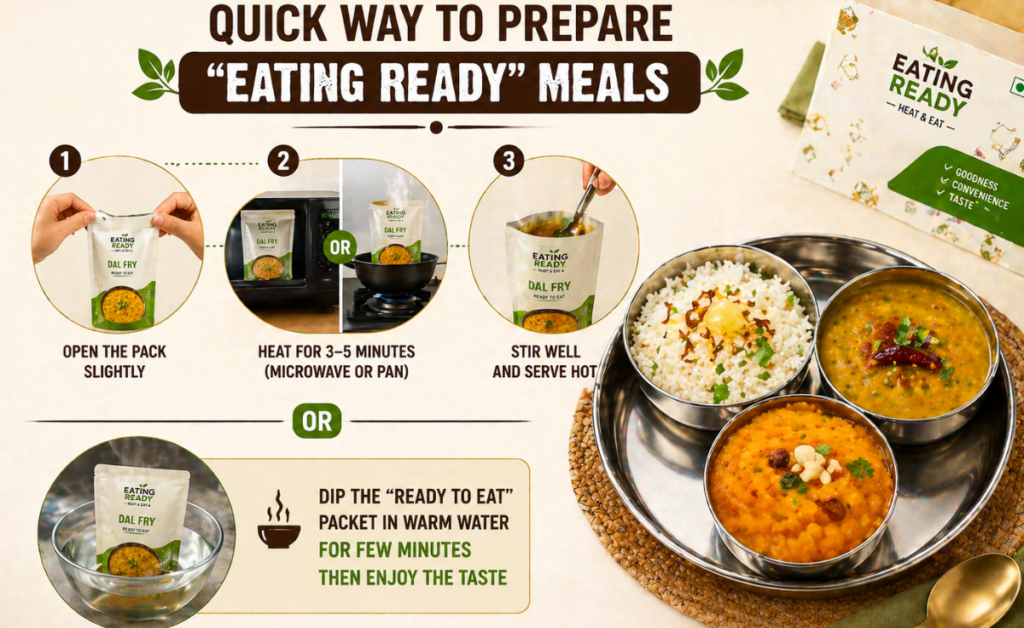
How To Prepare

• Open The Pack Slightly
• Heat For 2–3 Minutes (Microwave Or Pan)
• Stir Well And Serve Hot

Or
Dip the “Packet” in warm water for few minutes then enjoy the taste

Benefits of Buying Ready to Eat Meals Online

Buying online gives more advantages than local stores.

More Variety

Online platforms provide more options than offline shops.

Better Pricing

You can find discounts and offers, especially on bulk purchases.

Easy Delivery

Products are delivered to your home without any effort.

Access to Multiple Brands

You can explore different brands of RTE foods easily.

Are Ready to Eat Meals Healthy?

This is one of the most important questions.

The truth is, not all ready meals are unhealthy. It depends on what you choose.

Healthy Options

  • Balanced meals
  • Low preservatives
  • High-quality ingredients

Less Healthy Options

  • High sodium content
  • Too much oil
  • Highly processed food

So, if you choose wisely, ready to eat meals can be a good option for occasional or even regular use.

Price Range of Ready to Eat Meals in India

The cost of ready meals depends on brand, quantity, and quality.

  • Basic meals: Low cost and budget-friendly
  • Mid-range meals: Better quality and taste
  • Premium meals: Higher price with better ingredients

You can easily find cheap ready to eat meals that are affordable for daily use.

Ready to Eat Meals vs Traditional Cooking

There is always a comparison between ready meals and home-cooked food.

Feature Ready to Eat Meals Home Cooking
Time Very fast Time-consuming
Effort Minimal High
Cost Can be affordable Depends
Taste Good Usually better
Health Depends on choice More control

Best Situations to Use Ready to Eat Meals

These meals are useful in many real-life situations.

For Students

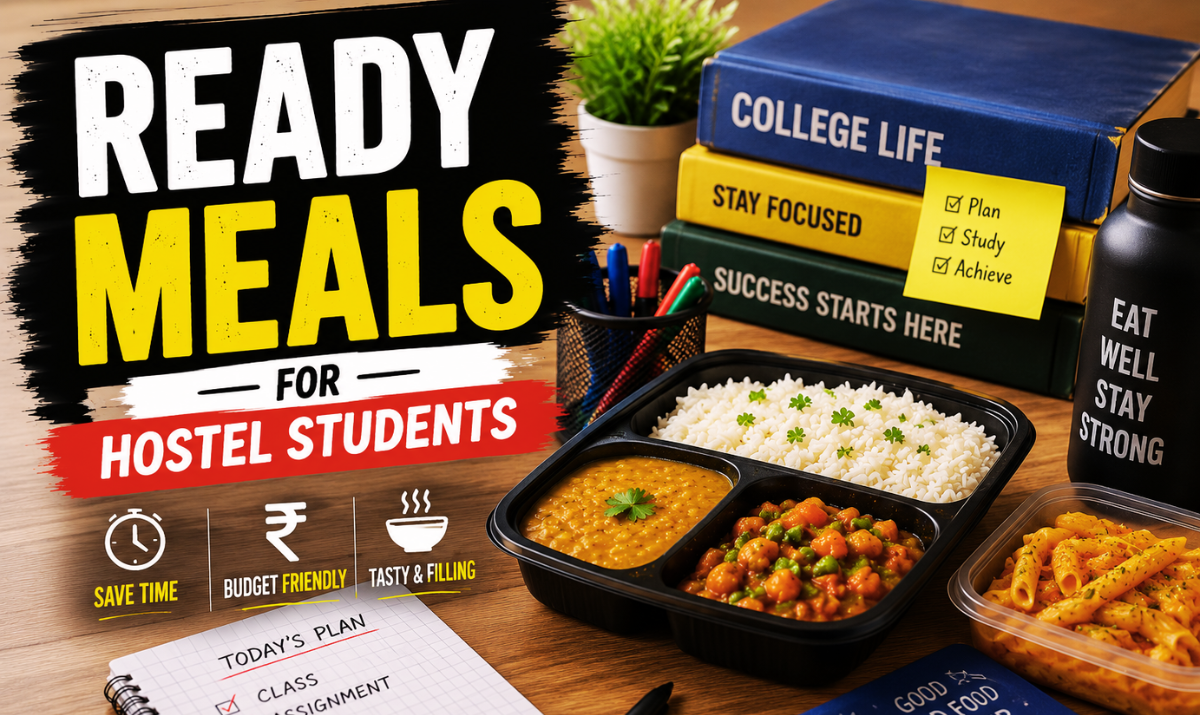
Students living in hostels often do not have access to a kitchen.

For Working Professionals

Office workers can save time during busy schedules.

For Travelers

Travelers prefer lightweight and easy food options.

For Emergency Use

Useful during unexpected situations when cooking is not possible.

Common Mistakes to Avoid

People often make simple mistakes while buying ready meals India products.

  • Choosing only based on price
  • Ignoring ingredient quality
  • Not checking expiry dates
  • Eating only ready meals daily

Always maintain balance in your diet.

Tips for Storage and Usage

Proper storage ensures better quality.

  • Store in a cool and dry place
  • Avoid exposure to sunlight
  • Do not use damaged packaging
  • Consume quickly after opening

Future of Ready to Eat Food in India

The demand for ready to eat food India is expected to grow even more in the coming years.

Reasons include:

  • Busy lifestyle
  • Increasing online shopping
  • Better product quality
  • More health-focused options

More brands are entering the market, giving customers better choices.

Final Conclusion

If you are looking for convenience, affordability, and variety, then choosing to buy ready to eat meals online in India is a practical decision.

However, always remember:

  • Focus on quality
  • Choose balanced meals
  • Avoid over-dependence

With the right selection, ready meals can become a useful part of your daily life.

Also Read Our Other Articles : https://eatingready.com/quick-meals-in-2-minutes/

Also Read Our Other Health Related Articles : 7 Essential Habits for Sustainable and Healthy Weight Loss

Also Read Our Medium Articles : https://medium.com/@hmnutrition402

Posted on

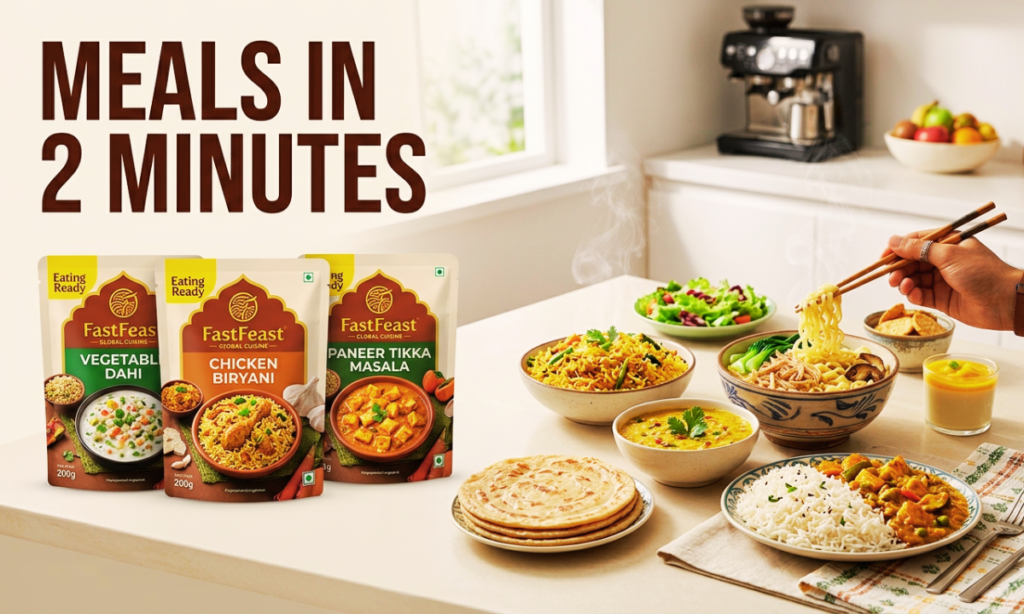
Quick Meals In 2 Minutes

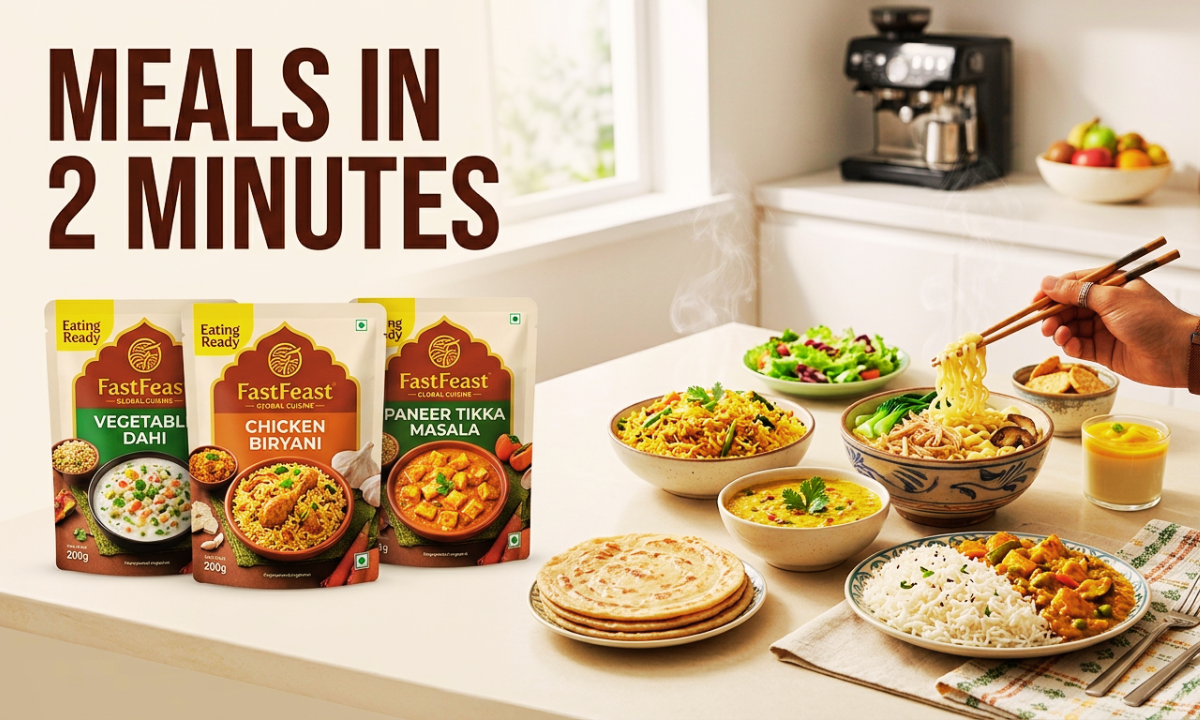
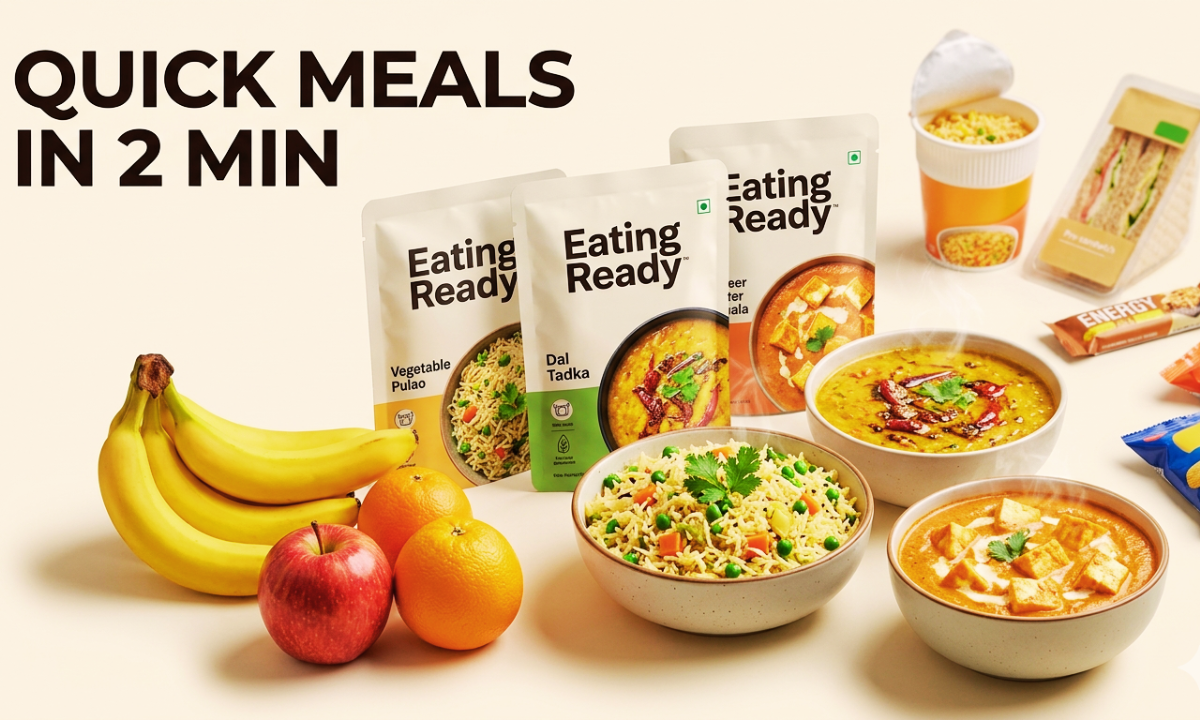
Quick meals in 2 minutes with Eating Ready ready to eat meals showing instant food packets and freshly served dishes

In today’s fast life, finding time to cook is not always possible. Many people struggle to prepare food during busy mornings, late work hours, or while traveling. This is where Quick Meals in 2 Minutes become a perfect solution.

If you are a student, working professional, traveler, or someone living without a kitchen, having access to fast and simple food options can make life much easier. The good part is that you don’t need cooking skills or a lot of ingredients to enjoy a good meal.

In this short article, you will learn about the best 2 minute meals, smart food choices, and how ready to eat meals and Eating Ready products can help you save time without compromising taste.

Why Quick Meals in 2 Minutes Are Popular

Today Lazy And Working People prefer food that is fast, simple, and reliable. Cooking from scratch every day is not always easy, especially with busy schedules.

Main Reasons:

  • Lack of time for cooking
  • Busy work or study routine
  • Travel and outdoor lifestyle
  • No kitchen or limited cooking setup
  • Need for instant hunger solution

Quick meals solve these problems by offering fast preparation and easy availability.

What Makes a Good 2-Minute Meal?

  • Ready within 2 minutes or less
  • Easy to prepare or no cooking needed
  • Safe and hygienic
  • Easy to carry and store
  • Provides enough energy
  • Nutritious and tasty

This is why ready to eat meals are becoming the first choice for many people.

Best Quick Meals in 2 Minutes Options

1. Ready to Eat Meals (Best Option)

Ready to eat meals are designed for speed and quick useeful. they require no cooking or just simple heating.

Examples:

  • Veg Pulao
  • Dal Tadka
  • Paneer Butter Masala
  • Biryani
  • Chicken Curry
  • Fish Curry

Why it works:

  • No preparation needed
  • Ready in minutes
  • Long shelf life
  • Easy to carry anywhere

Eating Ready meals are specially made for people who want quick, hygienic, and tasty food. They are perfect for travel, office, and daily use.

2. Instant Noodles

Features:

  • Ready in 2 – 5 minutes
  • Easy to cook with hot water
  • Affordable and widely available
  • Tasty, But Not Healthy and Nutritious

3. Oats and Instant Flakes

Benefits:

  • Light and filling
  • Ready in 5 minutes
  • Good for breakfast
  • Can be prepared quickly

4. Sandwiches and Rolls

Ideas:

  • Peanut butter sandwich
  • Cheese sandwich
  • Vegetable sandwich
  • Potato Rolls

5. Energy Bars and Protein Snacks

Benefits:

  • No cooking required
  • Easy to carry
  • Quick to eat
  • Instant Energy
  • Tasty, but too much Sugar

6. Fruits

Natural and refreshing.

Best options:

  • Banana
  • Apple
  • Oranges

7. Ready to Eat Snacks and Desserts

Adds taste and variety.

Examples:

  • Biscuits, Namkeen
  • Chips, Weafers
  • Brownies
  • Ready to eat sweets

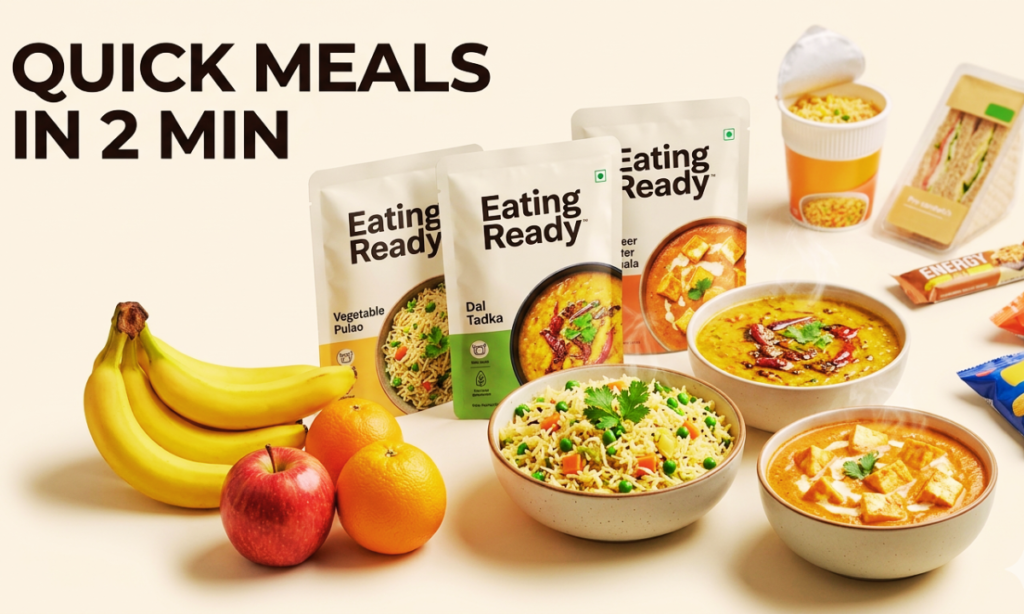
quick meals in 2 minutes with eating ready meals and fruits

Comparison Table: Quick Meal Options

Food Type Preparation Time Effort Level Shelf Life Healthy
Ready to Eat Meals 1–2 Minutes Very Low Long Yes
Instant Noodles 5 Minutes Low Medium No
Oats 2 – 5 Minutes Low Medium Yes
Sandwiches 2–5 Minutes Medium Short Yes
Snacks Instant Very Low Long No
Fruits Instant Very Low Short Yes

What is Ready to Eat Meals?

Ready to eat meals are complete food products that need no cooking. Some meals can be eaten direct from the pack, and some others need heating or just hot water added.

These meals are specially created for easy storage, long shelf life and Easy. They are widely used by travelers, campers, office workers, hostlers, army, daily use and even in emergency situations.

Why Ready to Eat Meals Are the Smartest Choice

Ready to eat meals are the most balanced solution of all the options.

Key Benefits:

  • Saves time and extra effort
  • No cooking required
  • Hygienic packaging
  • Easy to carry during travel
  • Available in many varieties (Veg, Non Veg, Deserts, Snacks etc.)

Situations Where 2-Minute Meals Are Useful

  • Early morning late rush
  • Late night hunger
  • Office lunch breaks
  • Travel and road trips
  • Emergency food needs

Eating Ready meals are specially designed for quick consumption. Whether you are at home, office, or on a journey, they provide a reliable food option without hassle.

How To Prepare

• Open The Pack Slightly
• Heat For 2–3 Minutes (Microwave Or Pan)
• Stir Well And Serve Hot

Or
Dip the “Packet” in warm water for few minutes then enjoy the taste

Who Needs Quick Ready to Eat Meals the Most?

Students and Hostlers

Busy schedules and limited cooking facilities make quick meals very useful.

Working Professionals

Helps with time management and not missing meals.

Travelers

Perfect for Long Journeys, Trips, Camping, Business Journey and Haj Umrah Trips

People Without Kitchen

A practical and simple solution for daily food needs.

Fitness Conscious Individuals

They can choose healthy ready to eat meal option like Rich in Protein.

Tips to Choose the Best Quick Meals

1. Check Ingredients

Choose meals with better quality ingredients like our “Eating Ready” Brand.

2. Look at Shelf Life

Make sure the product is fresh and also has enough shelf life.

3. Nutritional Value

Pick meals which have a good balance of protein, carbs, and fiber.

4. Avoid Too Much Junk Food

Do not depend only on snacks.

5. Try Trusted Brands

Genuine brands like Eating Ready offer variety foods with better quality.

Future of Quick Meals

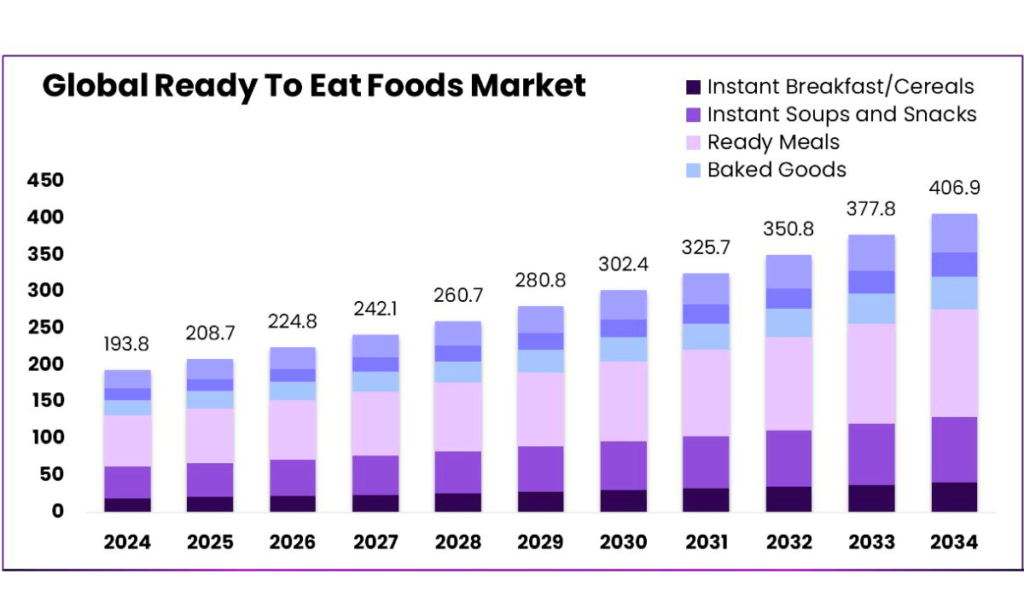
The demand for quick meals is increasing every year.

Ready to eat meals market growth chart

In the future, we can expect

  • Healthier ready meal options
  • More variety in flavors
  • Increased focus on balanced nutrition
  • Better packaging technology
  • Affordable pricing
  • Easy availability everywhere

Final Conclusion

Quick meals in 2 minutes are not just about easy. They are a practical solution for modern life. With the right choice, you can save time, stay healthy, and enjoy your food without stress.

Ready to eat meals, especially from Eating Ready, make it more easier by providing fast, hygienic, and tasty food anytime you need it.

Whether you are busy, traveling, or living without a kitchen, quick meals help you stay prepared and satisfied.

FAQs

1. What are quick meals in 2 minutes?

Ans: They are food options that can be prepared or eaten within 2 minutes.

2. Are ready to eat meals safe?

Ans: Yes, if you choose good quality products and check expiry dates.

3. Can I eat quick meals daily?

Ans: Yes, but choose balanced and healthy options like Eating Ready Foods.

4. What is the easiest quick meal?

Ans: Ready to eat meals are the easiest and most convenient.

5. Do quick meals require cooking?

Ans: Some require minimal heating, while others need no cooking.

6. Are they suitable for long trips?

Ans: Yes, they are specially made for long shelf life and travel use.

7. Do ready meals require refrigeration?

Ans: No, but you can store it.

Also Read this Article: No Kitchen? What to Eat

Posted on

Best Food For Road Trips

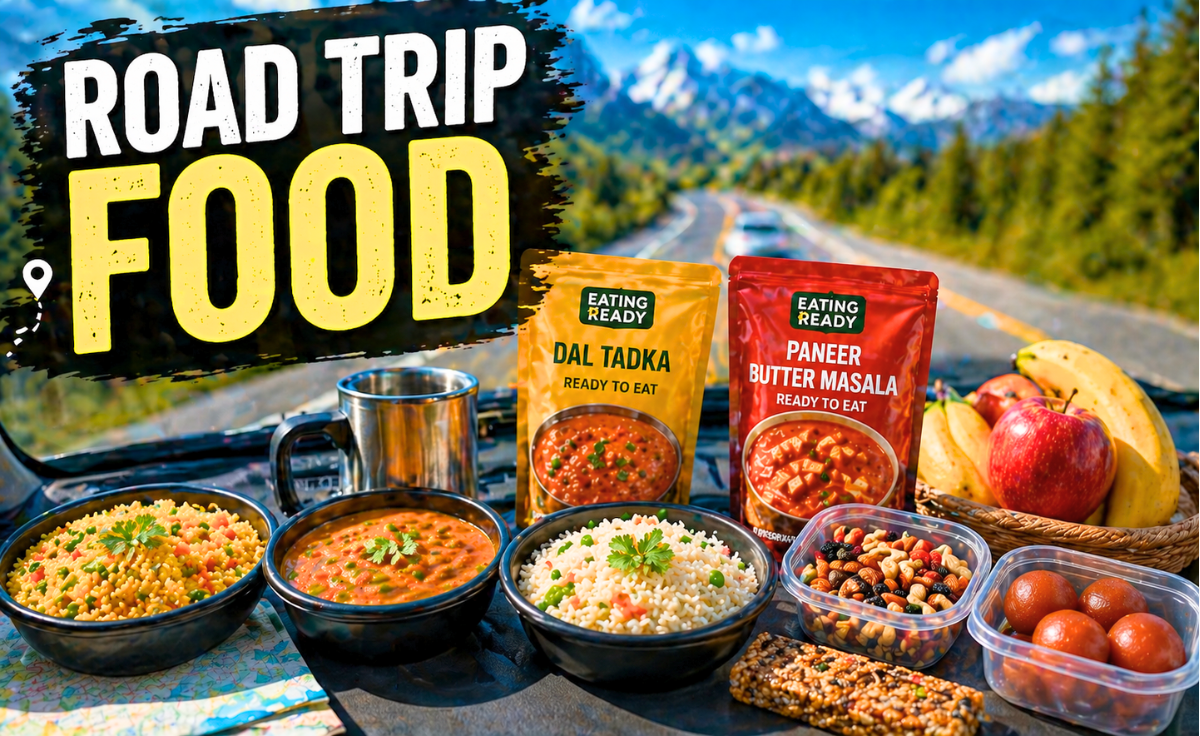
Best food for road trips including ready to eat meals, snacks, fruits, and travel friendly food options for long drives

Best Food For Road Trips: Traveling and Road trips are all about freedom, fun, enjoy and exploring new places. But one thing that can make or break your journey is food. Stopping again and again to find something to eat wastes time, and roadside food is not always safe or healthy. That’s why planning the best food for road trips is very important.

In this complete article, you will discover the best food ideas, smart packing tips, and how to choose the right meals for a smooth and enjoyable road journey.

Why Choosing the Right Food Matters on a Road Trip

When you are traveling long distances, your energy level depends a lot on what you eat. The wrong food can make you feel tired, heavy, or even sick.

Key Reasons:

  • Helps maintain energy while driving
  • Saves time by reducing stops
  • Keeps your journey hygienic and safe
  • Reduces travel expenses
  • Makes the trip more enjoyable

What Food is Perfect for Road Trips

Not all food is good for travel. The best food for a road trip should be:

  • Easy to carry
  • Delicious
  • Long-lasting without refrigeration
  • Quick to eat
  • Nutritious and filling

Best Food for Road Trips

1. Ready to Eat Meals

These are the most Useful and Suitable option for long journeys.

Examples:

  • Veg pulao
  • Dal rice
  • Paneer curry
  • Chicken meals

Why it’s good:

  • No cooking required
  • Long shelf life
  • Easy to carry
  • Just Heat or Boil, Serve Hot

2. Dry Snacks

Perfect for munching while driving.

Examples:

  • Chips
  • Biscuits
  • Namkeen
  • Roasted peanuts

Benefits:

  • No preparation needed
  • Lightweight
  • Easily available

3. Fresh Fruits

A healthy and refreshing option.

Best choices:

  • Apples
  • Bananas
  • Oranges

Why choose fruits:

  • Natural energy boost
  • Keeps you hydrated
  • Easy to digest

4. Sandwiches and Wraps

Simple homemade food that tastes great.

Ideas:

  • Veg sandwich
  • Cheese sandwich
  • Chicken wrap

5. Energy Bars and Protein Snacks

Ideal for quick energy during long drives.

Benefits:

  • High in nutrition
  • Easily available
  • Long shelf life

6. Nuts and Dry Fruits

Examples:

  • Almonds
  • Cashews
  • Raisins

Why it’s perfect:

  • Keeps you full for longer
  • Rich in nutrients
  • Easy to store

7. Instant Food Options

Examples:

  • Instant noodles
  • Cup soups
  • Oats

8. Desserts and Sweet Snacks

A little sweet can boost your mood.

Options:

  • Chocolate
  • Brownies
  • Ready to eat sweets

What foods to avoid on road trips

  • Oily and fried food
  • Cream based dishes
  • Foods that go bad quickly
  • Strong smelling items
  • Very spicy food

Why Ready to Eat Meals Are Perfect for Travelers

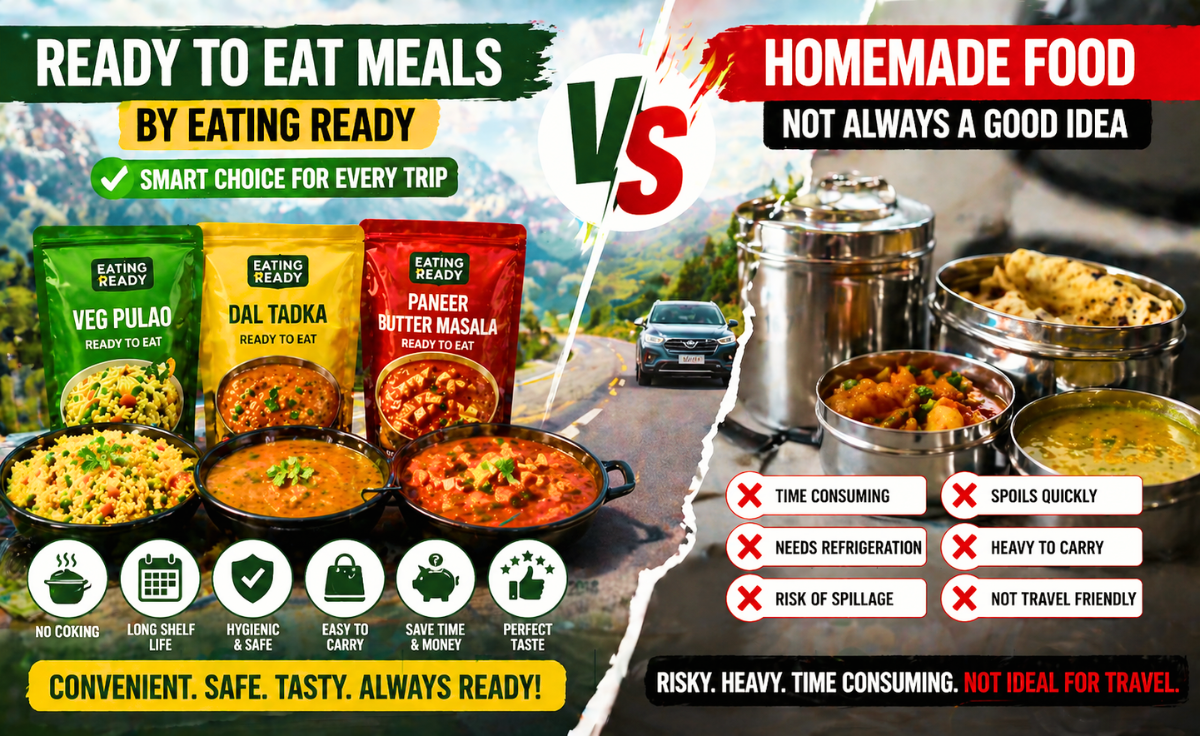
Ready to eat meals by Eating Ready vs homemade food comparison showing travel friendly benefits like convenience, hygiene, and long shelf life

1. No Cooking

You don’t have to make or cook anything. Take it out of the package and eat it or heat it up quickly. Or
Dip the Packet in warm water for few minutes then enjoy the taste.

2. Saving time

Time is important when you travel. You can eat right away instead of looking for food or cooking.

3. Clean and Safe

Most ready meals are packaged with cutting-edge technology that keeps them safe from contamination.

4. Long Shelf Life

These meals can last for months without storing fridge, so they are great for long trips.

5. Easy to Carry and Light

You can carry them in your backpack or luggage without adding extra weight.

Ready to Eat Meals vs Homemade Food

Factor Ready to Eat Meals Homemade Food
Convenience Very High Medium
Shelf Life Long Short
Preparation No effort Time required
Hygiene Controlled Depends on storage
Taste Good Fresh & customizable

Road Trip Food for Different Travelers

Solo Travelers

  1. Prefer simple and quick food options that require no preparation
  2. Ready to eat meals are a perfect choice for save time and effort
  3. Easy snacks like energy bars, biscuits, and nuts also good
  4. Compact food packs like Eating Ready Foods are ideal for light travel

Family Trips

  1. Carry a balanced mix of full meals, snacks, and fresh fruits
  2. Ready to eat meals like veg pulao, dal tadka, or biryani are very useful for everyone
  3. Helps manage hunger without depending on roadside food
  4. Useful during long drives and unexpected delays
  5. Keeping a variety foods everyone in the family finds something they like

For Kids

  1. Snacks like biscuits, chocolates, and flavored drinks keep them happy
  2. Ready to eat desserts such as kheer or gulab jamun can be a good treat
  3. Avoid spicy food for kids to prevent discomfort
  4. Small portion packs are easier for kids to handle

Long Distance Trips

  1. Choose light but energy rich food to stay active and focused
  2. Avoid heavy or oily meals that cause sleepiness
  3. Nuts, dry fruits, and protein snacks are instant energy
  4. Ready to eat meals from Eating Ready provide a quick, hygienic, and filling option during breaks
  5. Proper food choices help maintain mood and reduce fatigue

Business Travelers Trips

  1. Need quick, Fast, Options due to tight business schedules
  2. Ready to eat meals are ideal as they save time and avoid delays between meetings
  3. Easy to carry food helps maintain a professional and organized routine
  4. Light meals like pulao, rice bowls, or desert kheer are good options
  5. Helps avoid unhealthy fast food during travel
  6. Eating Ready meals offer a convenient, hygienic, and time saving solution for busy travel days
  7. Perfect for long drives, hotel stays, Haj Umrah Trips

Final Thoughts

Choosing the best food for road trips is not difficult if you plan smartly. A mix of ready to eat meals, snacks, fruits, and drinks can make your journey comfortable and enjoyable.

Good food keeps your energy high, saves time, and allows you to focus on the real purpose of your trip enjoying the journey.

So next time you plan a road trip, don’t forget to plan your food smartly and Choose our Eating Ready Meals.

FAQs

1. What is the best food for long road trips?

Ready to eat meals from Eating Ready, dry snacks, fruits, and energy bars are the best options.

2. How do I keep food fresh during travel?

Use airtight containers and carry a small cooler if needed.

3. Can I carry homemade food?

Yes, but choose items that don’t spoil quickly.

4. What snacks are best while driving?

Nuts, energy bars, and dry snacks are perfect.

5. Is ready to eat food safe?

Yes, if you choose good quality and check expiry dates.

Also Read This Informative Article :  Ready to Eat Meals for Travelers

Posted on

How Instant Ready to Eat Meals Are Manufactured

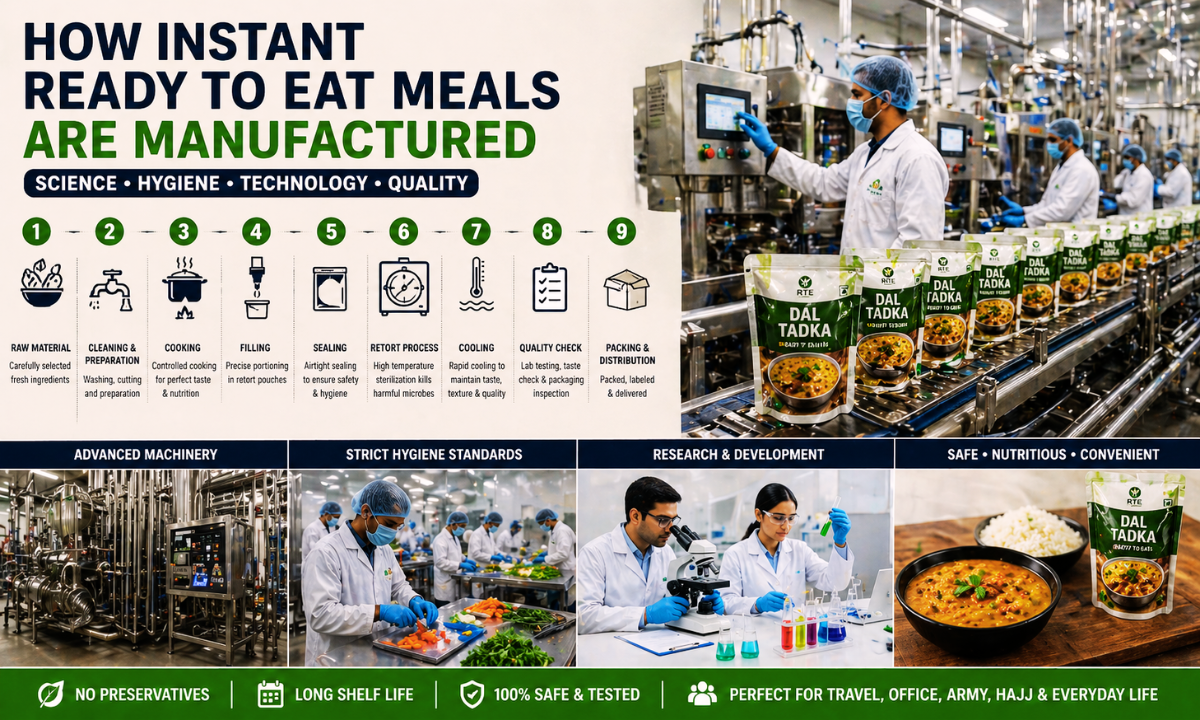
process of how instant ready to eat meals are manufactured including cooking and retort packaging

What Are Instant Ready to Eat Meals?

How Instant Ready to Eat Meals Are Manufactured: Instant ready to eat meals (RTE meals) are fully cooked foods that require minimal preparation—usually reheating.

In India, common examples include:

  • Dal Tadka
  • Rajma Chawal
  • Paneer Butter Masala
  • Vegetable Pulao
  • Chicken Curry

These are designed for busy lifestyles, travel, hostel living, army use, and even Hajj journeys where cooking is not possible.

Step-by-Step Manufacturing Process

The manufacturing of ready to eat food follows strict hygiene and food safety standards. Here’s how it works:

1. Ingredient Selection and Quality Check

Everything starts with raw ingredients.

  • Fresh vegetables, grains, and spices are selected
  • Meat (for non-veg meals) is properly cleaned and inspected
  • Ingredients are tested for quality and safety

Only approved raw materials move to the next stage.

2. Cleaning and Preparation

Before cooking, all ingredients are prepared:

  • Washing and sanitizing vegetables
  • Cutting and portioning
  • Pre-soaking pulses (like rajma, chole)
  • Marinating meat if required

This stage ensures consistency in taste and texture.

3. Controlled Cooking Process

Unlike home cooking, industrial cooking is highly controlled.

  • Large steam kettles or pressure cookers are used
  • Temperature and time are precisely managed
  • Recipes are standardized for consistent taste

The goal is to cook food completely while maintaining nutrition.

4. Portioning and Filling

Once the food is cooked:

  • It is divided into fixed portions
  • Filled into special heat-resistant pouches (retort pouches)
  • Air is removed to prevent contamination

This ensures each pack has uniform quantity and quality.

5. Sealing (Airtight Packaging)

The filled pouches are sealed tightly using machines.

  • No air leakage
  • Prevents bacterial entry
  • Maintains hygiene

This step is critical for long shelf life.

6. Retort Processing (Sterilization)

This is the most important stage.

  • Sealed pouches are placed in high-pressure steam chambers
  • Heated at around 115°C to 121°C
  • Kills bacteria, viruses, and microorganisms

This process makes ready to eat meals safe without refrigeration.

7. Cooling Process

After sterilization:

  • Pouches are cooled rapidly
  • Prevents overcooking
  • Maintains texture and taste

Controlled cooling is essential for product quality.

8. Quality Testing and Inspection

Before reaching the market, meals are tested:

  • Taste and texture check
  • Packaging integrity test
  • Microbial safety test

Only approved batches are released for sale.

9. Packaging and Distribution

Finally:

  • Products are labeled with expiry dates
  • Packed into cartons
  • Distributed to stores or online platforms

Most ready to eat Indian meals have a shelf life of 6–12 months.

What Is Retort Packaging?

Retort packaging is the backbone of ready meals.

  • Multi-layer heat-resistant pouch
  • Keeps food fresh without preservatives
  • Lightweight and easy to carry
  • Ideal for travel, hostel, and army use

This is why ready to eat food for travel or Hajj is so popular—it doesn’t need refrigeration.

Do Ready to Eat Meals Contain Preservatives?

A common myth is that all packaged food is full of chemicals.

In reality:

  • Most quality ready meals use heat sterilization (retort process) instead of preservatives
  • Some may contain minimal stabilizers for texture
  • Shelf life comes mainly from packaging and sterilization, not chemicals

Always check the ingredient list for clarity.

Are Nutrients Preserved During Manufacturing?

Some nutrient loss can happen due to heat, but:

  • Protein remains largely intact
  • Carbohydrates are unaffected
  • Minerals are mostly preserved
  • Vitamins may reduce slightly

Overall, ready to eat meals still provide good nutritional value, especially compared to junk food.

Why Ready to Eat Meals Are Safe for Travel and Daily Use

The manufacturing process ensures:

  • No contamination
  • Long shelf life
  • Easy portability
  • Safe consumption without refrigeration

This makes them ideal for:

  • Office lunch
  • Hostel life
  • Army and outdoor work
  • Long travel journeys
  • Hajj and Umrah

Ready to Eat Meals vs Fresh Cooking (Manufacturing Perspective)

Factor Ready to Eat Meals Home Cooking
Hygiene Control High (industrial standards) Depends on individual
Consistency Same every time Varies daily
Shelf Life 6–12 months 1–2 days
Preparation Time 2–5 minutes 30–90 minutes
Nutrient Retention Good Best
Convenience Very high Moderate

Common Myths About Ready to Eat Food

Myth 1: They are unhealthy

Truth: Quality meals are balanced and safe when consumed properly.

Myth 2: Full of preservatives

Truth: Most use heat sterilization, not chemicals.

Myth 3: Taste is artificial

Truth: Many Indian ready meals maintain authentic taste due to standardized recipes.

Conclusion

The manufacturing of instant ready to eat meals is a well-planned process that combines cooking, science, and packaging technology. From ingredient selection to retort sterilization, every step is designed to ensure safety, taste, and convenience.

Understanding this process helps you make better choices. When you select the right products, ready to eat meals can be a reliable part of your daily routine whether for office, travel, hostel, or religious journeys.

FAQs

1. How long do ready to eat meals last?

Most have a shelf life of 6–12 months if unopened.

2. Do ready meals need refrigeration?

No, they can be stored at room temperature until opened.

3. Is retort food safe?

Yes, it is sterilized at high temperature, making it safe to eat.

4. Are nutrients lost in ready meals?

Some vitamins reduce slightly, but overall nutrition remains good.

5. Can I eat ready to eat meals daily?

Yes, but balance them with fresh food for better health.

Posted on

Top Ready to Eat Meals for Office Lunch in India

ready to eat meals for office lunch in India including veg and non veg quick food options

A busy office schedule doesn’t always leave time for cooking, packing, or even stepping out for lunch. Skipping meals or relying on oily takeout isn’t a sustainable solution. This is where ready to eat meals become a practical option—especially when you choose the right ones.

From a food perspective, a good office lunch should be balanced, light enough to keep you active, and satisfying enough to avoid mid-day cravings. The right ready to eat Indian meals can deliver all of that with minimal effort.

Why Ready to Eat Meals Are Ideal for Office Lunch

When you’re working full-time, consistency matters more than perfection. Ready to eat food helps you stay on track.

  • Saves time during busy mornings
  • No need for kitchen access at the office
  • Portion-controlled meals
  • Easy to store and carry
  • Reliable taste every day

For professionals, students, and even remote workers, these meals simplify daily food planning.

What Makes a Good Office Ready Meal

Not every packaged meal is suitable for daily office use. A few key points matter:

  • Balanced nutrition (carbs + protein + light fats)
  • Moderate spice level (easy to digest during work hours)
  • Minimal oil and preservatives
  • Quick heating time (2–5 minutes)
  • Clean and secure packaging

Meals that are too heavy or oily can slow you down during work.

Top Ready to Eat Meals for Office Lunch in India

Here are some practical and commonly preferred options, based on taste, convenience, and digestibility.

Veg Ready to Eat Meals

  • Dal Tadka with Rice
    A simple, protein-rich option that feels like home food. Light and filling.
  • Rajma Chawal
    Slightly heavier but very satisfying. Best for long workdays.
  • Paneer Butter Masala with Rice
    Creamy, flavorful, and a good mix of carbs and protein.
  • Vegetable Pulao
    Light, aromatic, and easy to digest. Ideal for regular office lunches.
  • Khichdi
    One of the best options for digestion. Perfect if you want something light.

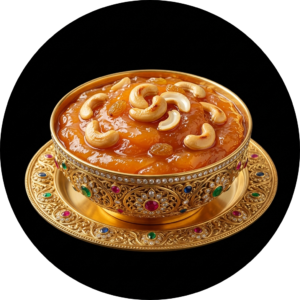
Kasi halwa in golden bowl

Non-Veg Ready to Eat Meals

  • Chicken Curry with Rice
    Balanced protein and taste. Keeps you full without feeling heavy.
  • Butter Chicken with Rice
    Rich and flavorful. Better for occasional office lunches.
  • Chicken Biryani
    Filling and energizing, but should not be consumed daily due to heaviness.
  • Egg Curry with Rice
    Affordable, protein-rich, and easy to digest compared to heavy meat dishes.

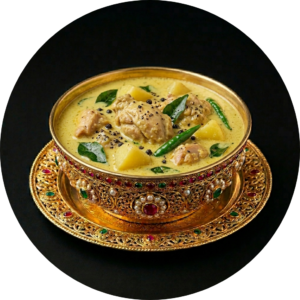
Chicken mappas in golden bowl

Best Ready to Eat Meals for Different Office Situations

For Daily Lunch

  • Dal rice
  • Veg pulao
  • Khichdi

For Heavy Workdays

  • Rajma chawal
  • Chicken curry rice

For Quick Lunch Break (10–15 mins)

  • Instant pulao
  • Ready rice + curry combo

For Health-Conscious Users

  • Low-oil dal meals
  • Light veg curries

Veg vs Non-Veg Ready Meals for Office

Factor Veg Ready Meals Non-Veg Ready Meals
Digestion Light and easy Slightly heavy
Protein Moderate High
Daily Use Ideal for everyday Better in moderation
Shelf Life Longer Slightly shorter
Taste Variety Simple and consistent Rich and diverse
Office Suitability Best for regular use Good for rotation

Ready to Eat Meals vs Home Packed Lunch

Factor Ready to Eat Meals Home Cooking
Time Required 2–5 minutes 30–60 minutes
Convenience Very high Moderate
Freshness Good (packed) Best
Portability Very easy Depends on packing
Cost Moderate per meal Cheaper overall
Flexibility Limited Fully customizable
Office Practicality Very practical Depends on routine

How to Use Ready to Eat Meals Smartly at Office

Using ready meals daily doesn’t mean compromising on quality. The smart approach is balance.

  • Combine meals with fresh salad or fruits
  • Keep curd or buttermilk for digestion
  • Rotate between veg and non-veg meals
  • Avoid eating very heavy meals every day
  • Keep 2–3 backup meals at your desk

This way, you maintain both convenience and nutrition.

Are Ready to Eat Meals Healthy for Office Use?

Yes, if chosen carefully.

Look for:

  • Simple ingredient list
  • Low oil content
  • Balanced nutrition
  • Trusted brands

Avoid:

  • Excessively spicy or oily meals
  • Highly processed instant junk food

Ready to eat food should support your routine, not replace good eating habits entirely.

Tips to Choose the Best Ready Meals in India

  • Always check manufacturing and expiry date
  • Prefer retort packaging (better preservation)
  • Choose meals with familiar ingredients
  • Avoid very cheap unknown products
  • Read basic nutrition labels

Conclusion

Ready to eat meals are no longer just emergency food—they’ve become a reliable option for office lunches in India. Whether you’re managing a tight schedule, avoiding unhealthy takeout, or simply looking for convenience, these meals offer a practical solution.

The key is to choose wisely and use them as part of a balanced routine. A combination of ready to eat food, occasional home cooking, and fresh additions can easily support a busy work lifestyle without sacrificing taste or health.

FAQs

1. Are ready to eat meals good for office lunch daily?

Yes, if you select balanced and low-oil options and combine them with fresh foods.

2. Which ready to eat meals are best for quick office lunch?

Dal rice, veg pulao, and instant curry rice combos are the most practical.

3. Can I carry ready to eat meals to office without fridge?

Yes, most Indian ready meals do not require refrigeration until opened.

4. Are non-veg ready meals suitable for office?

Yes, but they should be consumed in moderation due to heaviness.

5. How can I make ready meals healthier?

Add salad, curd, or fruits alongside your meal for better balance.

Posted on

Ready to Eat Meals for Busy Lifestyle: No Cooking, Just Heat & Eat

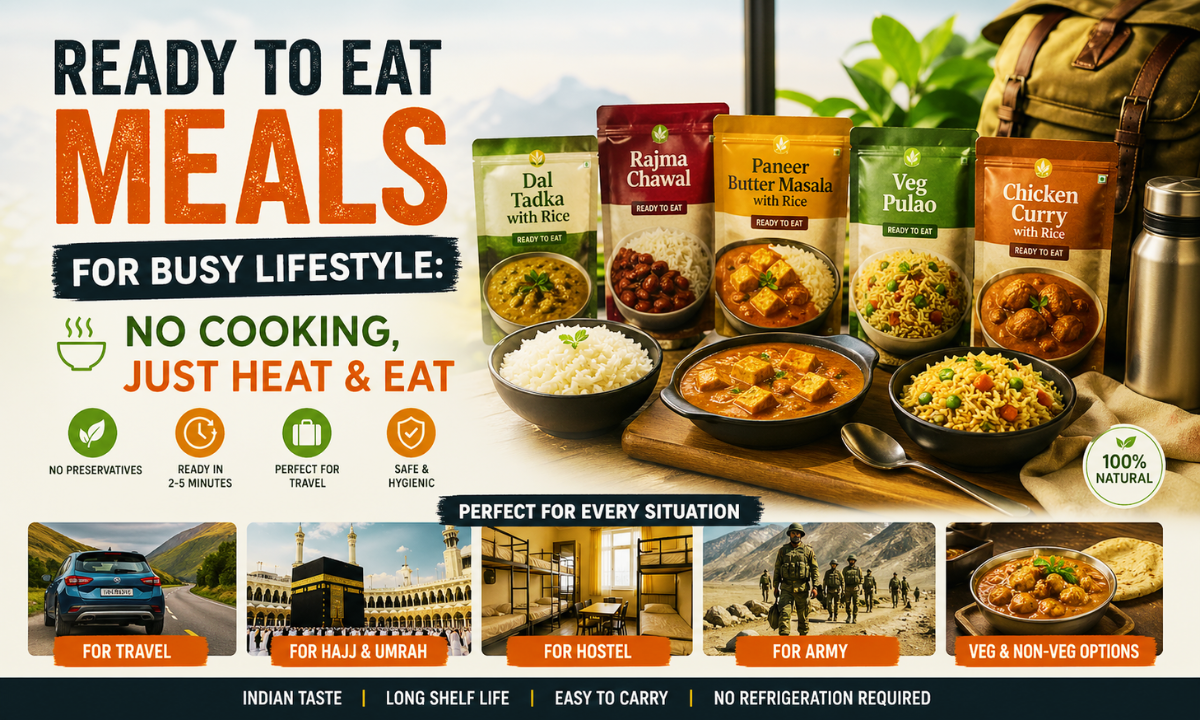
Ready to eat meals for busy lifestyle including Indian veg and non veg food for travel hostel and Hajj

Life today doesn’t leave much room for long cooking sessions. Whether you’re rushing to work, traveling, staying in a hostel, or preparing for something as demanding as Hajj, food should be the last thing you stress about. This is exactly where ready to eat meals step in — simple, practical, and surprisingly satisfying when chosen right.

As someone who understands food beyond just packaging, I’ll tell you honestly: not all ready meals are equal. But the right ones? They can save your time without compromising taste or nutrition.

Let’s break it down properly.

What Are Ready to Eat Meals?

Ready to eat meals (RTE meals) are fully cooked dishes that require minimal effort — usually just heating. No chopping, no masala prep, no waiting for hours.

You’ll find:

  • Indian ready to eat meals (dal, rice, curries)
  • Veg and non-veg options
  • Instant packed food for travel or work
  • Long shelf-life meals for emergency use

Think of them as your backup kitchen — always ready when you’re not.

Why Ready to Eat Food Is Perfect for Busy Lifestyle

A busy schedule doesn’t mean you should compromise on food. The right ready to eat food gives you:

1. Time Saving

No prep, no cleaning. Just heat and eat within minutes.

2. Consistent Taste

Unlike rushed home cooking, these meals are standardized — you get the same taste every time.

3. Portability

Perfect for:

  • Travel
  • Office lunch
  • Hostel life
  • Outdoor work

4. Long Shelf Life

Many ready to eat Indian meals last 3–6 months without refrigeration.

Best Ready to Eat Indian Meals You Can Try

If you’re someone who prefers desi taste, there’s plenty of variety:

Veg Ready to Eat Meals

  • Dal Tadka with Rice
  • Rajma Chawal
  • Paneer Butter Masala
  • Vegetable Pulao
  • Khichdi

These are light, filling, and ideal for daily use.

Non-Veg Ready to Eat Meals

  • Chicken Curry with Rice
  • Butter Chicken
  • Chicken Biryani
  • Egg Curry

Good protein options, especially useful for army personnel or physically active individuals.

Ready to Eat Meals for Travel

Traveling often means compromising on food — oily dhaba meals or expensive restaurants. That’s not always ideal.

Ready to eat meals for travel solve this problem:

  • Easy to carry
  • No dependency on location
  • Hygienic and portion-controlled

Just carry a small heater, hot water, or even use hotel kettles.

Best travel options:

  • Instant pulao packs
  • Ready dal + rice combo
  • Vacuum-packed curries

Ready to Eat Meals for Hajj & Umrah

During Hajj or Umrah, routine becomes unpredictable. Long walking hours, limited cooking access, and crowded conditions make food management difficult.

Ready to eat food for Hajj is not just convenient it’s practical.

Why it works:

  • No cooking required
  • Easy to store in luggage
  • Quick energy after long rituals
  • Hygienic compared to outside food

Ideal choices:

  • Khichdi (light and digestible)
  • Dal Rice packs
  • Veg curry + roti packs
  • High-protein non-veg meals

Avoid very spicy or heavy meals during Hajj digestion matters more than taste there.

Ready to Eat Meals for Hostel Students

Hostel life is where most people first understand the value of instant food.

Mess food is not always reliable. Late-night hunger is real.

Ready to eat meals for hostel:

  • No kitchen needed
  • Budget-friendly
  • Quick solution during exams

Top picks:

  • Instant noodles + ready curry combo
  • Ready poha or upma
  • Dal chawal packs

Pro tip: Always keep at least 2–3 packs stocked. You’ll thank yourself later.

Ready to Eat Meals for Army & Outdoor Workers

When you’re in the field — whether army, construction, or delivery work — food needs to be:

  • Quick
  • Energy-rich
  • Easy to carry

Ready to eat meals for army use are designed for tough conditions.

Benefits:

  • High calorie content
  • Durable packaging
  • Minimal preparation

Common options include:

  • Rice + curry combos
  • Protein-rich non-veg meals
  • Ready-to-eat paratha packs

Veg vs Non-Veg Ready to Eat Food: Which One Is Better?

Both have their place. It depends on your lifestyle.

Veg Ready Meals

  • Easier to digest
  • Safer for travel
  • Longer shelf life

Non-Veg Ready Meals

  • Higher protein
  • More filling
  • Better for physically active people

If you’re traveling or going for Hajj — veg is usually a safer choice.

Are Ready to Eat Meals Healthy?

This is the most common question.

The honest answer: It depends on what you choose.

Good ready to eat meals:

  • Use minimal preservatives
  • Have balanced nutrition
  • Are not overly oily

Avoid:

  • Excess sodium products
  • Very processed instant foods
  • Artificial flavor-heavy items

Think of ready meals as a smart replacement not junk food.

How to Choose the Best Ready to Eat Meals

From a chef’s perspective, here’s what you should check:

1. Ingredients List

Simple ingredients = better quality

2. Packaging Type

Retort packaging is best (keeps food fresh without chemicals)

3. Shelf Life

3- 6 months is ideal

4. Brand Trust

Don’t go for unknown ultra-cheap options

5. Taste Reviews

Always check real user feedback

Smart Ways to Use Ready to Eat Food Daily

You don’t have to rely on it fully. Use it strategically:

  • Lunch backup for busy workdays
  • Emergency dinner option
  • Travel companion
  • Hostel survival kit
  • Religious journeys like Hajj

Combine with fresh items:

  • Add salad
  • Add curd
  • Add fruits

This balances your meal.

Conclusion

Ready to eat meals are no longer just “emergency food.” When chosen carefully, they become a reliable part of your lifestyle whether you’re a traveler, student, working professional, or preparing for Hajj.

The key is simple: choose wisely, use smartly, and don’t depend blindly.

Good food doesn’t always need hours in the kitchen. Sometimes, it just needs the right pack — heated at the right time.

Comparison Between Ready to Eat Meals vs Home Cooking

Factor Ready to Eat Meals Home Cooking
Time Required Very quick (2–5 minutes) Takes 30–90 minutes
Effort No preparation needed Requires cutting, cooking, cleaning
Convenience Extremely convenient (just heat & eat) Less convenient, needs planning
Taste Consistent but slightly processed Fresh and customizable taste
Nutrition Good if chosen wisely Generally healthier and fresher
Shelf Life Long (6–12 months) Very short (1–2 days)
Portability Easy to carry (travel, hostel, Hajj) Difficult to carry and store
Cost Slightly higher per meal More cost-effective in bulk
Variety Limited but improving Unlimited options
Best For Busy lifestyle, travel, army, hostel, Hajj Daily routine when time is available

FAQs

1. Are ready to eat meals safe for daily use?

Yes, if you choose quality products with good ingredients. Avoid over-processed options.

2. Which ready to eat meals are best for travel?

Dal rice, pulao, and vacuum-packed curries are ideal for travel.

3. Can I take ready to eat food for Hajj?

Yes, they are highly recommended due to convenience and hygiene.

4. Are veg ready meals better than non-veg?

Veg meals are easier to digest and safer for travel, but non-veg offers more protein.

5. Do ready to eat meals require refrigeration?

Most Indian ready to eat meals do not require refrigeration until opened.