
Life today doesn’t leave much room for long cooking sessions. Whether you’re rushing to work, traveling, staying in a hostel, or preparing for something as demanding as Hajj, food should be the last thing you stress about. This is exactly where ready to eat meals step in — simple, practical, and surprisingly satisfying when chosen right.
As someone who understands food beyond just packaging, I’ll tell you honestly: not all ready meals are equal. But the right ones? They can save your time without compromising taste or nutrition.
Let’s break it down properly.
What Are Ready to Eat Meals?
Ready to eat meals (RTE meals) are fully cooked dishes that require minimal effort — usually just heating. No chopping, no masala prep, no waiting for hours.
You’ll find:
- Indian ready to eat meals (dal, rice, curries)
- Veg and non-veg options
- Instant packed food for travel or work
- Long shelf-life meals for emergency use
Think of them as your backup kitchen — always ready when you’re not.
Why Ready to Eat Food Is Perfect for Busy Lifestyle
A busy schedule doesn’t mean you should compromise on food. The right ready to eat food gives you:
1. Time Saving
No prep, no cleaning. Just heat and eat within minutes.
2. Consistent Taste
Unlike rushed home cooking, these meals are standardized — you get the same taste every time.
3. Portability
Perfect for:
- Travel
- Office lunch
- Hostel life
- Outdoor work
4. Long Shelf Life
Many ready to eat Indian meals last 3–6 months without refrigeration.
Best Ready to Eat Indian Meals You Can Try
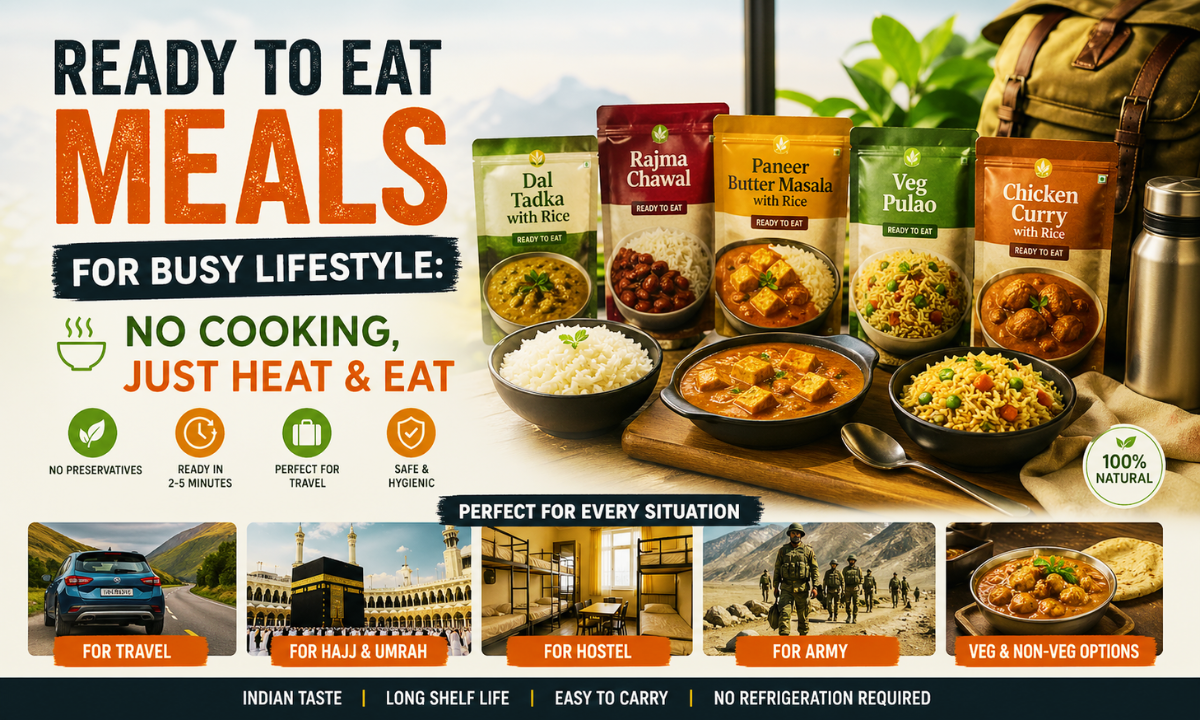
If you’re someone who prefers desi taste, there’s plenty of variety:
Veg Ready to Eat Meals
- Dal Tadka with Rice
- Rajma Chawal
- Paneer Butter Masala
- Vegetable Pulao
- Khichdi
These are light, filling, and ideal for daily use.
Non-Veg Ready to Eat Meals
- Chicken Curry with Rice
- Butter Chicken
- Chicken Biryani
- Egg Curry
Good protein options, especially useful for army personnel or physically active individuals.
Ready to Eat Meals for Travel
Traveling often means compromising on food — oily dhaba meals or expensive restaurants. That’s not always ideal.
Ready to eat meals for travel solve this problem:
- Easy to carry
- No dependency on location
- Hygienic and portion-controlled
Just carry a small heater, hot water, or even use hotel kettles.
Best travel options:
- Instant pulao packs
- Ready dal + rice combo
- Vacuum-packed curries
Ready to Eat Meals for Hajj & Umrah
During Hajj or Umrah, routine becomes unpredictable. Long walking hours, limited cooking access, and crowded conditions make food management difficult.
Ready to eat food for Hajj is not just convenient it’s practical.
Why it works:
- No cooking required
- Easy to store in luggage
- Quick energy after long rituals
- Hygienic compared to outside food
Ideal choices:
- Khichdi (light and digestible)
- Dal Rice packs
- Veg curry + roti packs
- High-protein non-veg meals
Avoid very spicy or heavy meals during Hajj digestion matters more than taste there.
Ready to Eat Meals for Hostel Students
Hostel life is where most people first understand the value of instant food.
Mess food is not always reliable. Late-night hunger is real.
Ready to eat meals for hostel:
- No kitchen needed
- Budget-friendly
- Quick solution during exams
Top picks:
- Instant noodles + ready curry combo
- Ready poha or upma
- Dal chawal packs
Pro tip: Always keep at least 2–3 packs stocked. You’ll thank yourself later.
Ready to Eat Meals for Army & Outdoor Workers
When you’re in the field — whether army, construction, or delivery work — food needs to be:
- Quick
- Energy-rich
- Easy to carry
Ready to eat meals for army use are designed for tough conditions.
Benefits:
- High calorie content
- Durable packaging
- Minimal preparation
Common options include:
- Rice + curry combos
- Protein-rich non-veg meals
- Ready-to-eat paratha packs
Veg vs Non-Veg Ready to Eat Food: Which One Is Better?
Both have their place. It depends on your lifestyle.
Veg Ready Meals
- Easier to digest
- Safer for travel
- Longer shelf life
Non-Veg Ready Meals
- Higher protein
- More filling
- Better for physically active people
If you’re traveling or going for Hajj — veg is usually a safer choice.
Are Ready to Eat Meals Healthy?
This is the most common question.
The honest answer: It depends on what you choose.
Good ready to eat meals:
- Use minimal preservatives
- Have balanced nutrition
- Are not overly oily
Avoid:
- Excess sodium products
- Very processed instant foods
- Artificial flavor-heavy items
Think of ready meals as a smart replacement not junk food.
How to Choose the Best Ready to Eat Meals
From a chef’s perspective, here’s what you should check:
1. Ingredients List
Simple ingredients = better quality
2. Packaging Type
Retort packaging is best (keeps food fresh without chemicals)
3. Shelf Life
3- 6 months is ideal
4. Brand Trust
Don’t go for unknown ultra-cheap options
5. Taste Reviews
Always check real user feedback
Smart Ways to Use Ready to Eat Food Daily
You don’t have to rely on it fully. Use it strategically:
- Lunch backup for busy workdays
- Emergency dinner option
- Travel companion
- Hostel survival kit
- Religious journeys like Hajj
Combine with fresh items:
- Add salad
- Add curd
- Add fruits
This balances your meal.
Conclusion
Ready to eat meals are no longer just “emergency food.” When chosen carefully, they become a reliable part of your lifestyle whether you’re a traveler, student, working professional, or preparing for Hajj.
The key is simple: choose wisely, use smartly, and don’t depend blindly.
Good food doesn’t always need hours in the kitchen. Sometimes, it just needs the right pack — heated at the right time.
Comparison Between Ready to Eat Meals vs Home Cooking
| Factor | Ready to Eat Meals | Home Cooking |
|---|---|---|
| Time Required | Very quick (2–5 minutes) | Takes 30–90 minutes |
| Effort | No preparation needed | Requires cutting, cooking, cleaning |
| Convenience | Extremely convenient (just heat & eat) | Less convenient, needs planning |
| Taste | Consistent but slightly processed | Fresh and customizable taste |
| Nutrition | Good if chosen wisely | Generally healthier and fresher |
| Shelf Life | Long (6–12 months) | Very short (1–2 days) |
| Portability | Easy to carry (travel, hostel, Hajj) | Difficult to carry and store |
| Cost | Slightly higher per meal | More cost-effective in bulk |
| Variety | Limited but improving | Unlimited options |
| Best For | Busy lifestyle, travel, army, hostel, Hajj | Daily routine when time is available |
FAQs
1. Are ready to eat meals safe for daily use?
Yes, if you choose quality products with good ingredients. Avoid over-processed options.
2. Which ready to eat meals are best for travel?
Dal rice, pulao, and vacuum-packed curries are ideal for travel.
3. Can I take ready to eat food for Hajj?
Yes, they are highly recommended due to convenience and hygiene.
4. Are veg ready meals better than non-veg?
Veg meals are easier to digest and safer for travel, but non-veg offers more protein.
5. Do ready to eat meals require refrigeration?
Most Indian ready to eat meals do not require refrigeration until opened.