


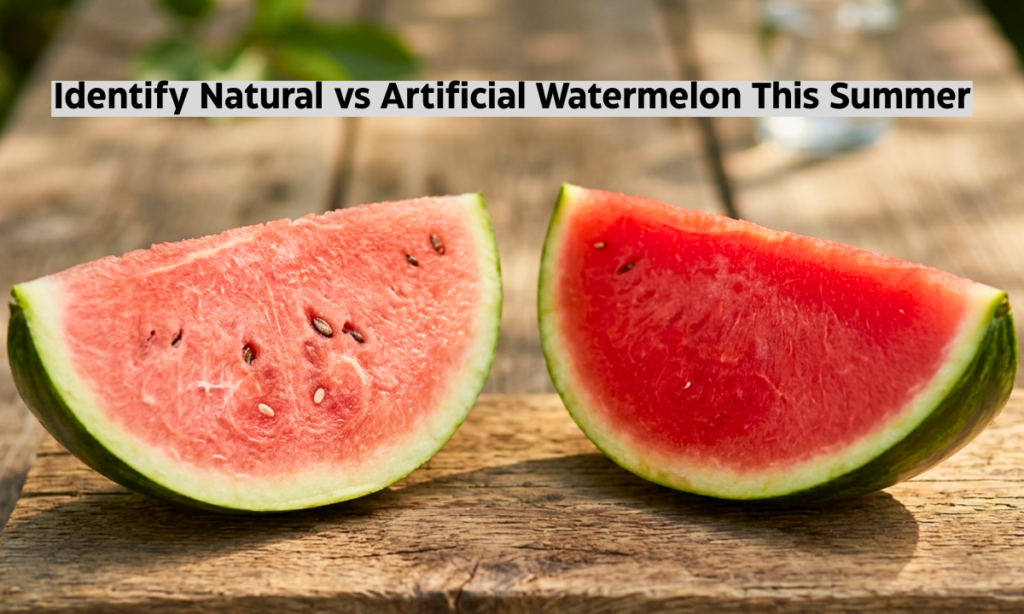
How to Identify Natural vs Artificial Watermelon This Summer: is one of the most loved fruits in summer. Juicy, sweet, and refreshing—it feels like the perfect way to beat the heat.
But in recent years, many people have become more careful about what they buy. Concerns about artificially enhanced or chemically treated fruits have made buyers more alert.
So how can you tell if a watermelon is natural or not? Here are simple, practical ways to identify it before you eat.
1. Look at the Color Inside
A natural watermelon usually has a soft pink to deep red color, but not overly bright.
If the inside looks:
- Too bright red
- Almost unnatural or shiny
…it may have been artificially enhanced.
Natural fruit always looks slightly uneven, not perfect.
2. Check the Texture
When you cut a natural watermelon, the texture should be:
- Slightly grainy
- Juicy but firm
If it looks:
- Too smooth and rubbery
- Or extremely watery without structure
…it can be a sign of unnatural treatment.
3. Observe the Seeds
Seeds can tell you a lot.
- Natural watermelon has black or dark brown mature seeds
- Too many white, undeveloped seeds may indicate early harvesting or altered growth
Seed pattern should look natural and not overly uniform.
4. Taste Matters
Natural watermelon has a balanced sweetness.
If the taste feels:
- Too sweet in an artificial way
- Or completely bland
…it may not be naturally ripened.
Good watermelon always has a fresh, light flavor—not overpowering.
5. Water Test Trick
A simple home check:
- Take a small piece and put it in water
- If the water turns slightly pink naturally, it’s fine
- If the color spreads quickly and strongly, be cautious
This can sometimes indicate added color or treatment.
6. Check the Outer Skin
Natural watermelon skin usually has:
- Slight marks or uneven patterns
- A dull finish (not too shiny)
If the surface looks:
- Too perfect
- Very glossy or polished
…it may have been treated for appearance.
7. Buy from Trusted Sources
One of the safest ways is to buy from:
- Known vendors
- Local farmers
- Trusted fruit sellers
Consistency in quality matters more than appearance.
Why This Matters in Summer
During extreme heat, watermelon consumption increases. This also increases the chance of poor quality or artificially enhanced fruits entering the market.
Choosing natural watermelon ensures:
- Better hydration
- Safer consumption
- Real taste and nutrition
Final Thoughts
Not every watermelon is unsafe, but being aware helps you make better choices.
A natural watermelon may not look perfect, but it tastes real and feels refreshing. In summer, when your body depends on hydration and light foods, choosing the right fruit makes a difference.
Simple observation is often enough—you just need to know what to look for.