


What Are Instant Ready to Eat Meals?
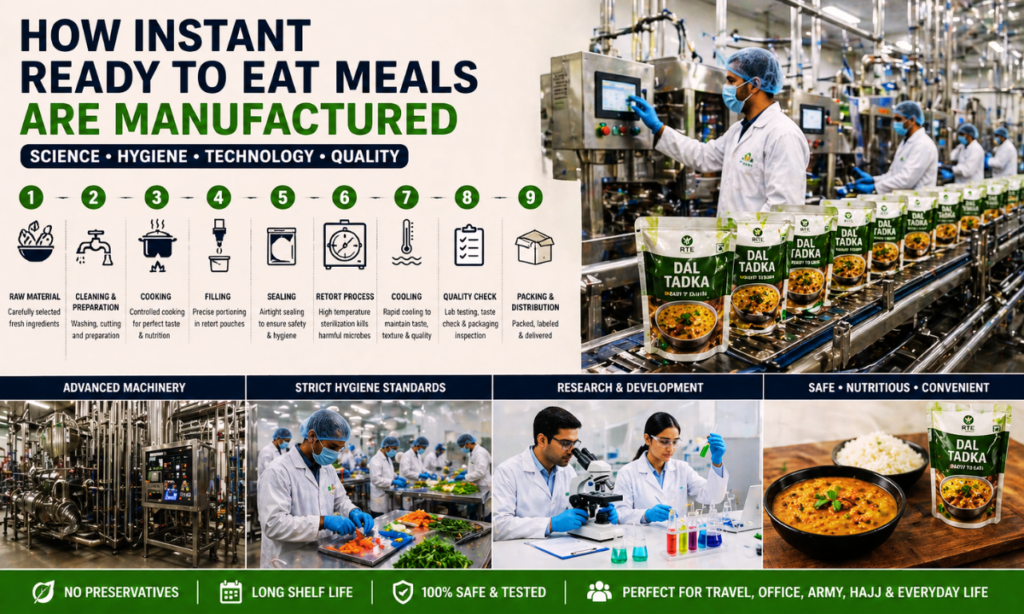
How Instant Ready to Eat Meals Are Manufactured: Instant ready to eat meals (RTE meals) are fully cooked foods that require minimal preparation—usually reheating.
In India, common examples include:
- Dal Tadka
- Rajma Chawal
- Paneer Butter Masala
- Vegetable Pulao
- Chicken Curry
These are designed for busy lifestyles, travel, hostel living, army use, and even Hajj journeys where cooking is not possible.
Step-by-Step Manufacturing Process
The manufacturing of ready to eat food follows strict hygiene and food safety standards. Here’s how it works:
1. Ingredient Selection and Quality Check
Everything starts with raw ingredients.
- Fresh vegetables, grains, and spices are selected
- Meat (for non-veg meals) is properly cleaned and inspected
- Ingredients are tested for quality and safety
Only approved raw materials move to the next stage.
2. Cleaning and Preparation
Before cooking, all ingredients are prepared:
- Washing and sanitizing vegetables
- Cutting and portioning
- Pre-soaking pulses (like rajma, chole)
- Marinating meat if required
This stage ensures consistency in taste and texture.
3. Controlled Cooking Process
Unlike home cooking, industrial cooking is highly controlled.
- Large steam kettles or pressure cookers are used
- Temperature and time are precisely managed
- Recipes are standardized for consistent taste
The goal is to cook food completely while maintaining nutrition.
4. Portioning and Filling
Once the food is cooked:
- It is divided into fixed portions
- Filled into special heat-resistant pouches (retort pouches)
- Air is removed to prevent contamination
This ensures each pack has uniform quantity and quality.
5. Sealing (Airtight Packaging)
The filled pouches are sealed tightly using machines.
- No air leakage
- Prevents bacterial entry
- Maintains hygiene
This step is critical for long shelf life.
6. Retort Processing (Sterilization)
This is the most important stage.
- Sealed pouches are placed in high-pressure steam chambers
- Heated at around 115°C to 121°C
- Kills bacteria, viruses, and microorganisms
This process makes ready to eat meals safe without refrigeration.
7. Cooling Process
After sterilization:
- Pouches are cooled rapidly
- Prevents overcooking
- Maintains texture and taste
Controlled cooling is essential for product quality.
8. Quality Testing and Inspection
Before reaching the market, meals are tested:
- Taste and texture check
- Packaging integrity test
- Microbial safety test
Only approved batches are released for sale.
9. Packaging and Distribution
Finally:
- Products are labeled with expiry dates
- Packed into cartons
- Distributed to stores or online platforms
Most ready to eat Indian meals have a shelf life of 6–12 months.
What Is Retort Packaging?
Retort packaging is the backbone of ready meals.
- Multi-layer heat-resistant pouch
- Keeps food fresh without preservatives
- Lightweight and easy to carry
- Ideal for travel, hostel, and army use
This is why ready to eat food for travel or Hajj is so popular—it doesn’t need refrigeration.
Do Ready to Eat Meals Contain Preservatives?
A common myth is that all packaged food is full of chemicals.
In reality:
- Most quality ready meals use heat sterilization (retort process) instead of preservatives
- Some may contain minimal stabilizers for texture
- Shelf life comes mainly from packaging and sterilization, not chemicals
Always check the ingredient list for clarity.
Are Nutrients Preserved During Manufacturing?
Some nutrient loss can happen due to heat, but:
- Protein remains largely intact
- Carbohydrates are unaffected
- Minerals are mostly preserved
- Vitamins may reduce slightly
Overall, ready to eat meals still provide good nutritional value, especially compared to junk food.
Why Ready to Eat Meals Are Safe for Travel and Daily Use
The manufacturing process ensures:
- No contamination
- Long shelf life
- Easy portability
- Safe consumption without refrigeration
This makes them ideal for:
- Office lunch
- Hostel life
- Army and outdoor work
- Long travel journeys
- Hajj and Umrah
Ready to Eat Meals vs Fresh Cooking (Manufacturing Perspective)
| Factor | Ready to Eat Meals | Home Cooking |
|---|---|---|
| Hygiene Control | High (industrial standards) | Depends on individual |
| Consistency | Same every time | Varies daily |
| Shelf Life | 6–12 months | 1–2 days |
| Preparation Time | 2–5 minutes | 30–90 minutes |
| Nutrient Retention | Good | Best |
| Convenience | Very high | Moderate |
Common Myths About Ready to Eat Food
Myth 1: They are unhealthy
Truth: Quality meals are balanced and safe when consumed properly.
Myth 2: Full of preservatives
Truth: Most use heat sterilization, not chemicals.
Myth 3: Taste is artificial
Truth: Many Indian ready meals maintain authentic taste due to standardized recipes.
Conclusion
The manufacturing of instant ready to eat meals is a well-planned process that combines cooking, science, and packaging technology. From ingredient selection to retort sterilization, every step is designed to ensure safety, taste, and convenience.
Understanding this process helps you make better choices. When you select the right products, ready to eat meals can be a reliable part of your daily routine whether for office, travel, hostel, or religious journeys.
FAQs
1. How long do ready to eat meals last?
Most have a shelf life of 6–12 months if unopened.
2. Do ready meals need refrigeration?
No, they can be stored at room temperature until opened.
3. Is retort food safe?
Yes, it is sterilized at high temperature, making it safe to eat.
4. Are nutrients lost in ready meals?
Some vitamins reduce slightly, but overall nutrition remains good.
5. Can I eat ready to eat meals daily?
Yes, but balance them with fresh food for better health.